Knowledge library

Insights

Practical thinking for clearer decisions across business intelligence, analytics, data and AI.

9 insights

Is AI Making Good Work Harder to Measure?

BI & Analytics

Is AI Making Good Work Harder to Measure?

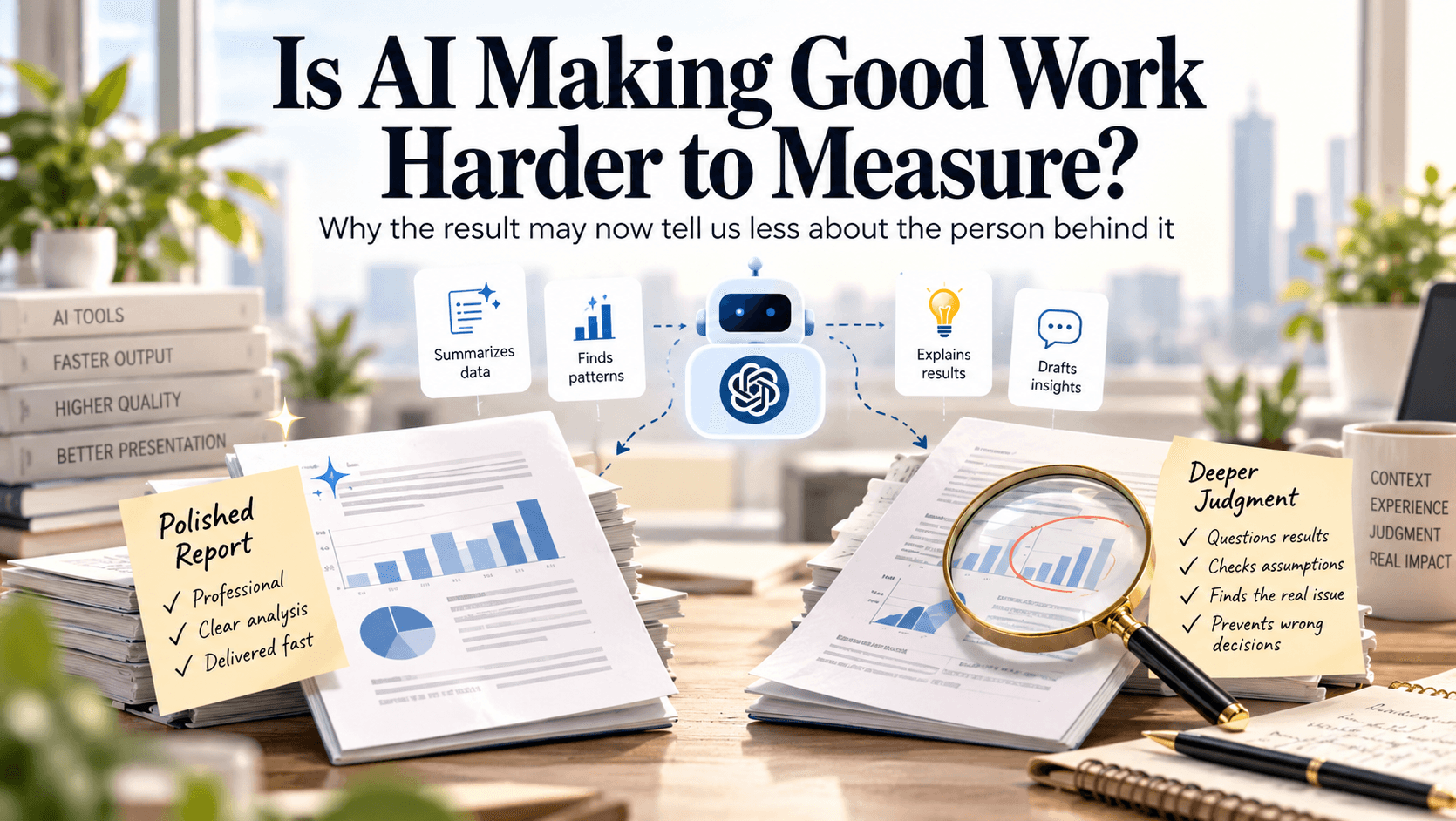
AI can make people faster and raise the quality of visible work, yet that creates a management problem we rarely discuss: the result may now tell us less about the capability behind it. As AI takes on more execution, judging performance may depend less on counting output and more on understanding the human judgment that made the work worth trusting.

10 min readRead insight
Your P&L Does Not Tell the Whole Story

Analytics Leadership

Your P&L Does Not Tell the Whole Story

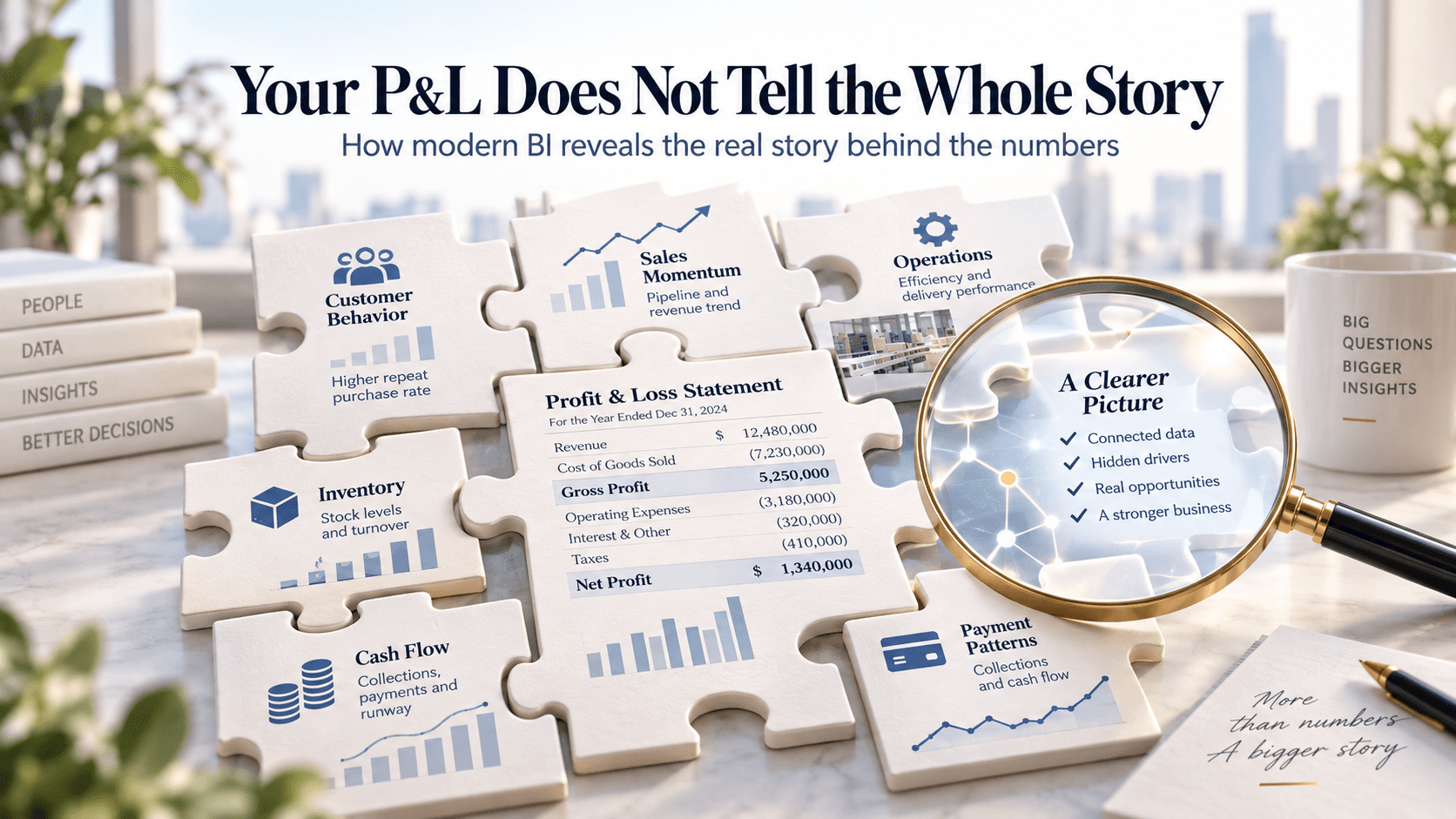
Strong financial results can hide a weakening business. Revenue and profit show the outcome, but they do not always reveal whether customer behavior, commercial momentum, operational performance and other success drivers are getting stronger or starting to erode. Modern BI helps management see those drivers clearly, making it easier to judge whether today’s performance is truly sustainable.

From Reactive to Proactive: How Modern Businesses Are Learning to Act Earlier

Analytics Leadership

From Reactive to Proactive: How Modern Businesses Are Learning to Act Earlier

Most businesses were built to respond after something happened: a customer complained, sales declined, inventory ran short, or a payment became overdue. Better data, BI, automation and AI are changing that model by helping companies recognize important signals earlier and act while the outcome can still be influenced. The shift is not about predicting everything or automating every decision. It is about creating enough visibility, context and organizational readiness to move from explaining what already happened toward shaping what happens next.

13 min readRead insight
How Work Really Gets Done? What Official Processes Don’t Tell You

BI & Analytics

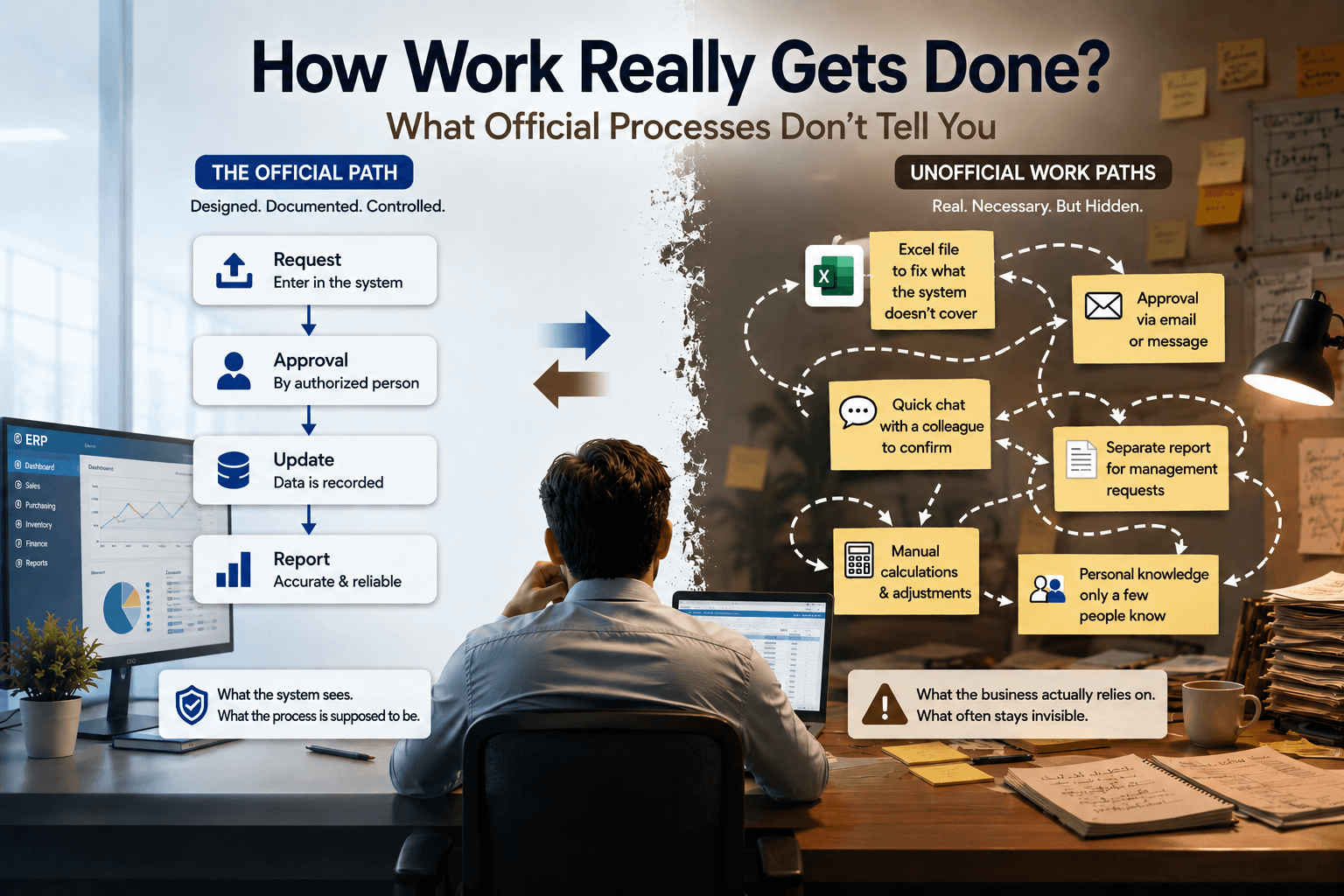
How Work Really Gets Done? What Official Processes Don’t Tell You

Every company has official processes, but employees often develop spreadsheets, side calculations, manual checks and informal shortcuts to deal with situations the official system does not handle well. These shadow processes are easy to dismiss as bad habits, yet they often reveal something important about how the business actually works. Ignoring them during ERP, BI or AI projects can mean digitizing the process on paper while missing the process people truly depend on.

10 min readRead insight
What Do You Really Need to Adopt AI in Business?

AI & Automation

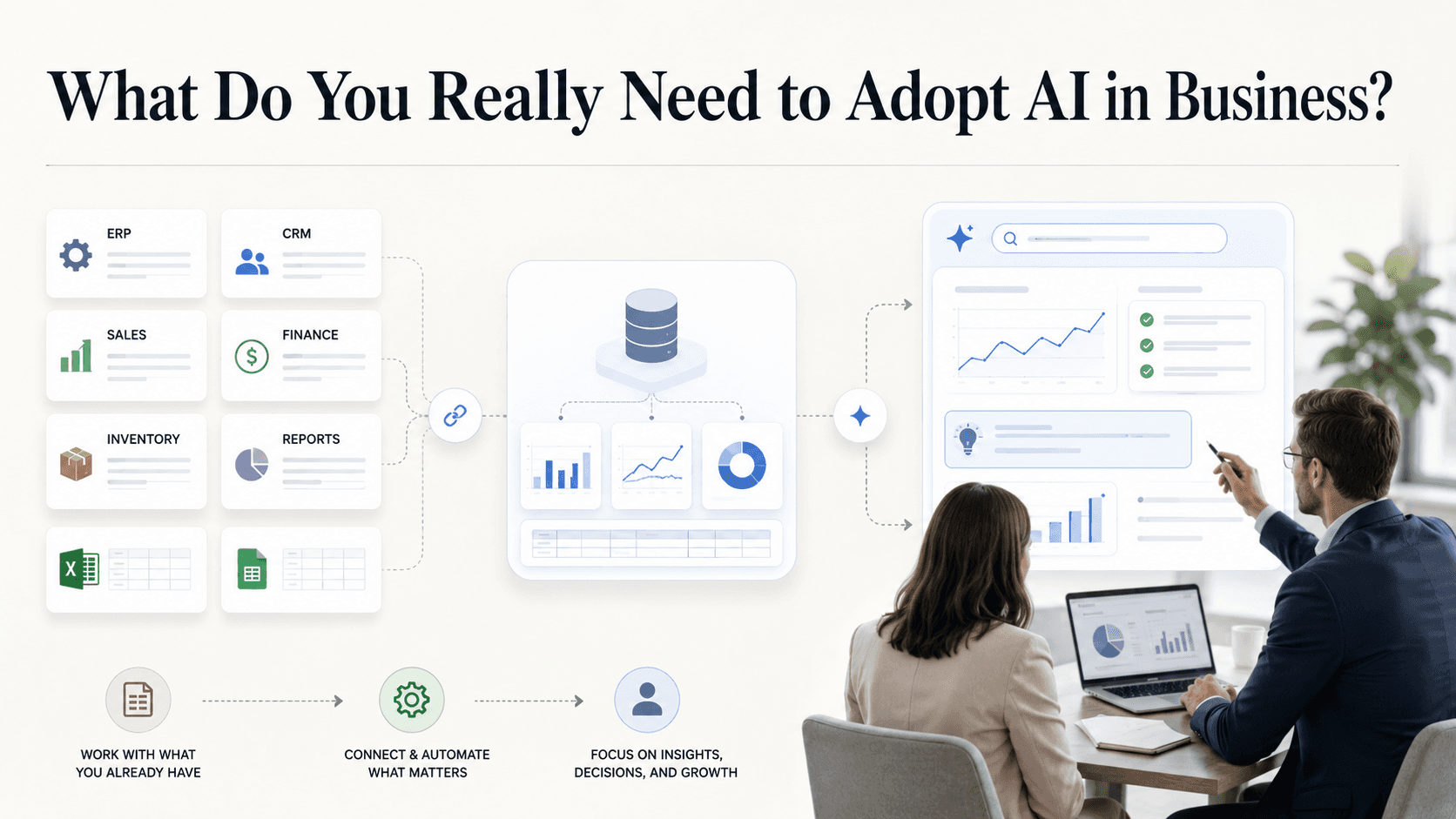
What Do You Really Need to Adopt AI in Business?

Many small and mid-sized businesses still assume that preparing for AI means replacing systems, rebuilding infrastructure, hiring more technical staff, and accepting higher operating costs. That picture is increasingly outdated. Modern cloud services, APIs, automation platforms, and managed AI tools make it possible to build around what already works, start with one useful problem, and expand gradually while keeping human judgment at the center. The real priority is not to become an AI company, but to become ready enough to use AI well.

11 min readRead insight
Dynamic Pricing: From Reaction to Strategy

BI & Analytics

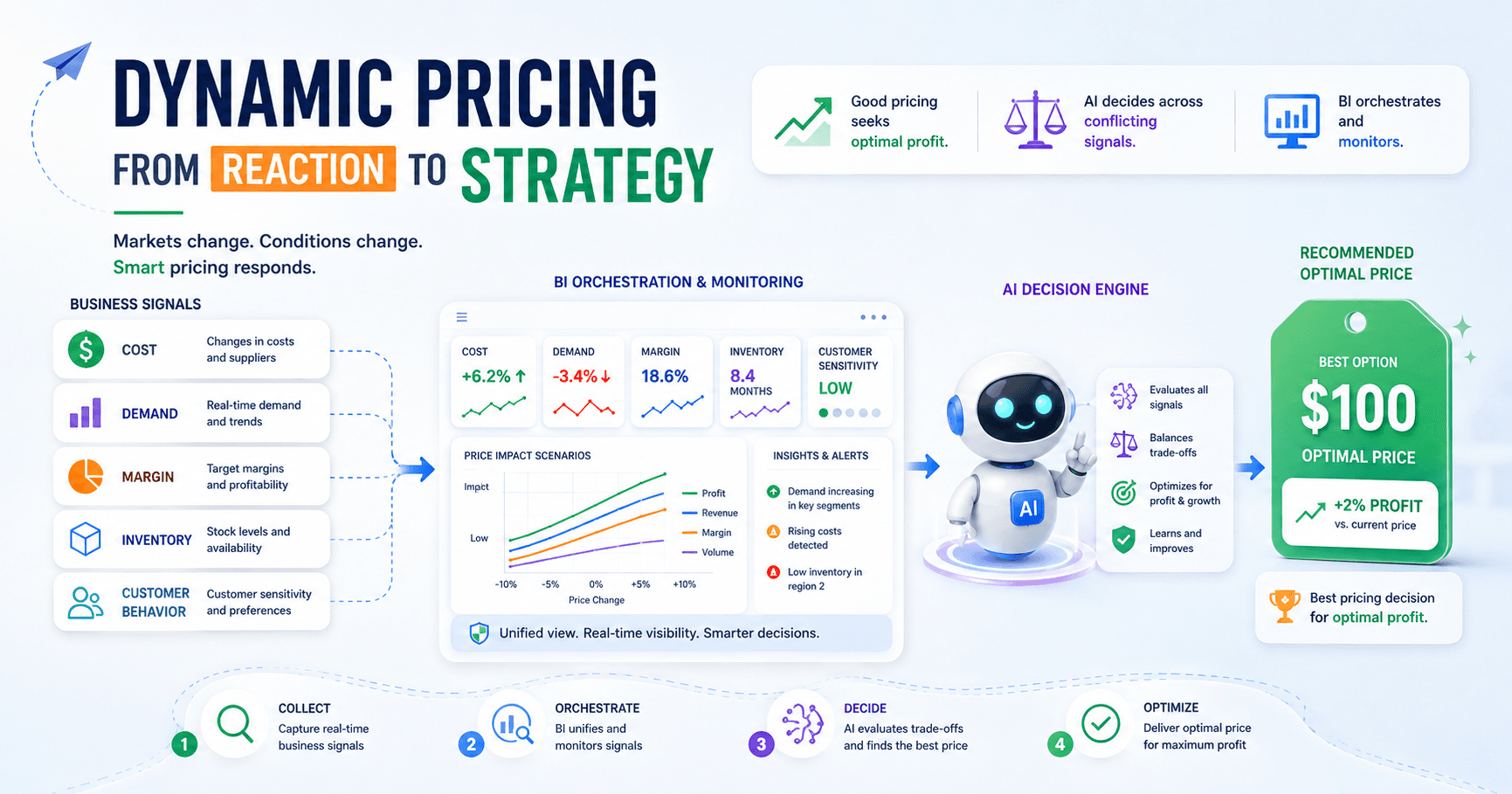
Dynamic Pricing: From Reaction to Strategy

A price can stay fixed while the business around it changes. Costs rise, demand moves, inventory builds up, margins narrow, and customers respond differently over time. Dynamic pricing is not about changing prices constantly. It is about recognizing when the conditions behind a price have changed enough to justify another decision. Business Intelligence provides the visibility, while AI agents can continuously monitor those signals, test possible responses, and bring the right pricing decision to the right person before margin or opportunity is lost.

From Dashboards to Data Products

AI & Automation

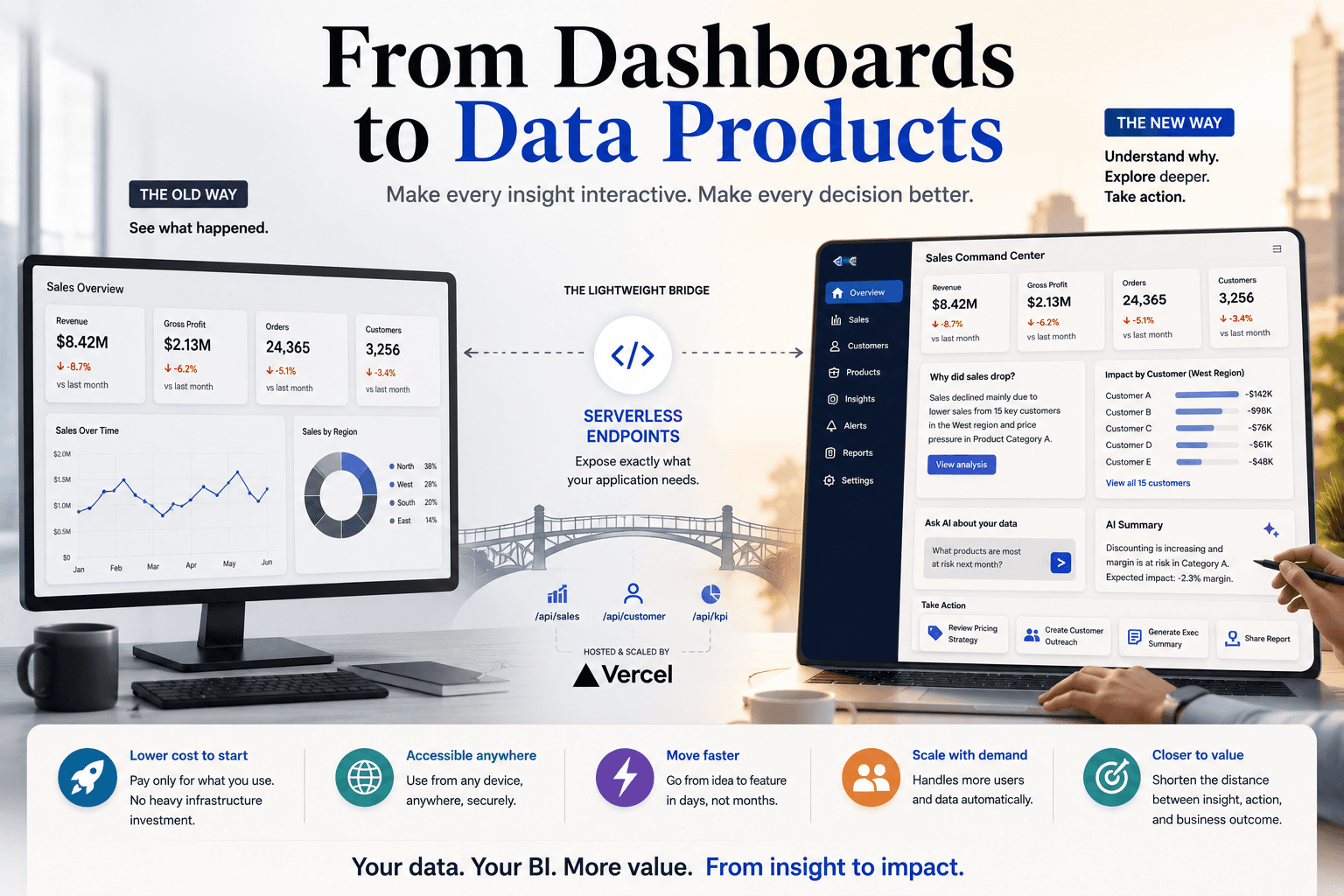
From Dashboards to Data Products

For a long time, moving from a good data idea to something people could actually use often meant more infrastructure, more setup, and more time before the value became visible. Serverless endpoints are gradually changing that picture, making it easier to build interactive applications around the BI environment that already exists. SQL Server, Power BI, Tableau, and the Data Warehouse can continue doing what they do best, while platforms such as Vercel add a lighter application layer where users can explore information, ask AI for context, and move naturally from insight toward action.

Where Should Your Business Actually Run?

AI & Automation

Where Should Your Business Actually Run?

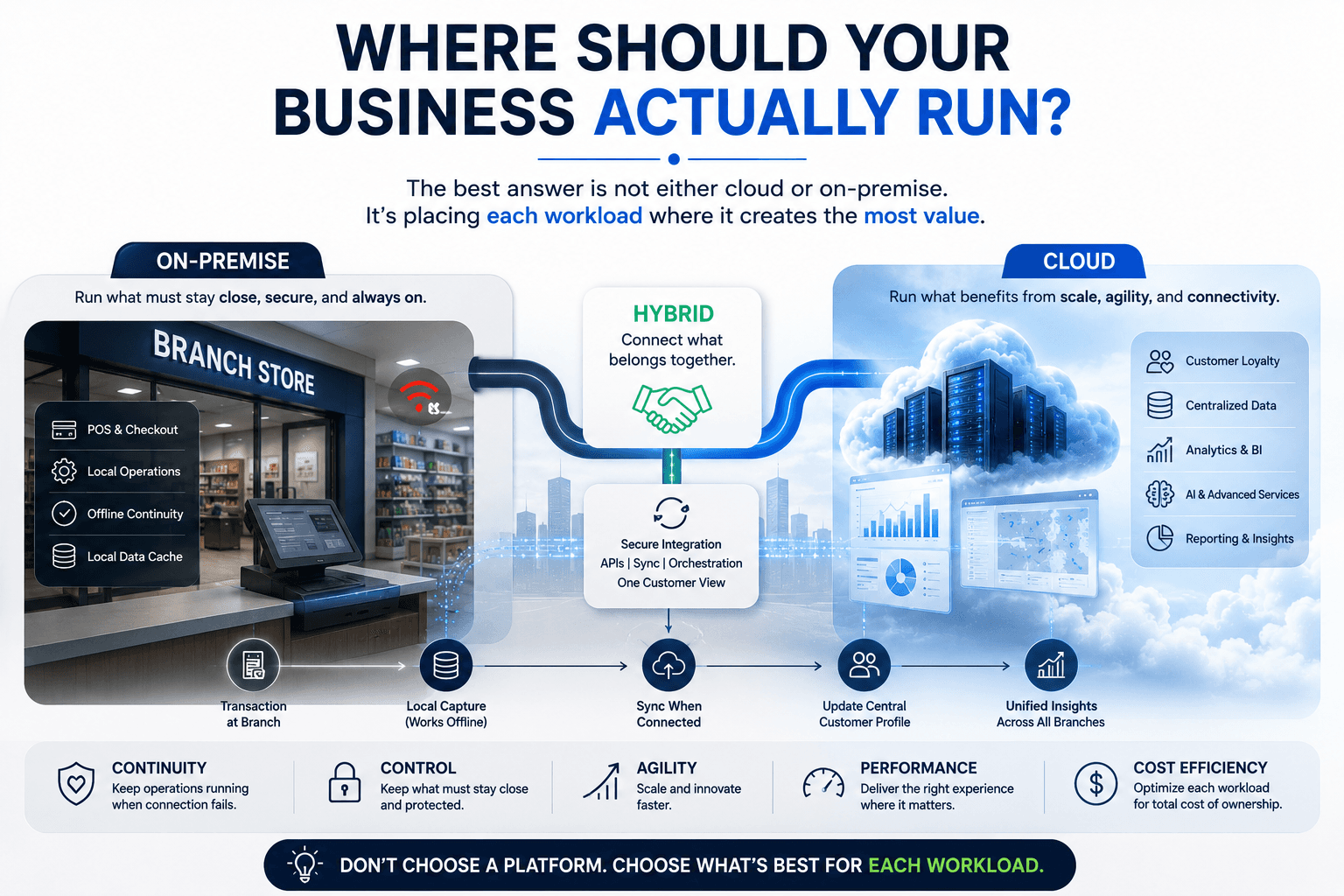
For years, infrastructure strategy was framed as a choice between cloud and on-premise, but most businesses do not have one type of workload with one set of needs. A branch system that must keep running during an internet outage, a customer platform that needs one shared view across locations, an analytics environment, and an AI workload may all belong to the same company while requiring very different infrastructure. The better strategy starts with the workload rather than the platform. Decide what must stay local, what needs central coordination, what requires elasticity or tighter contro

Edge Computing

BI & Analytics

Edge Computing

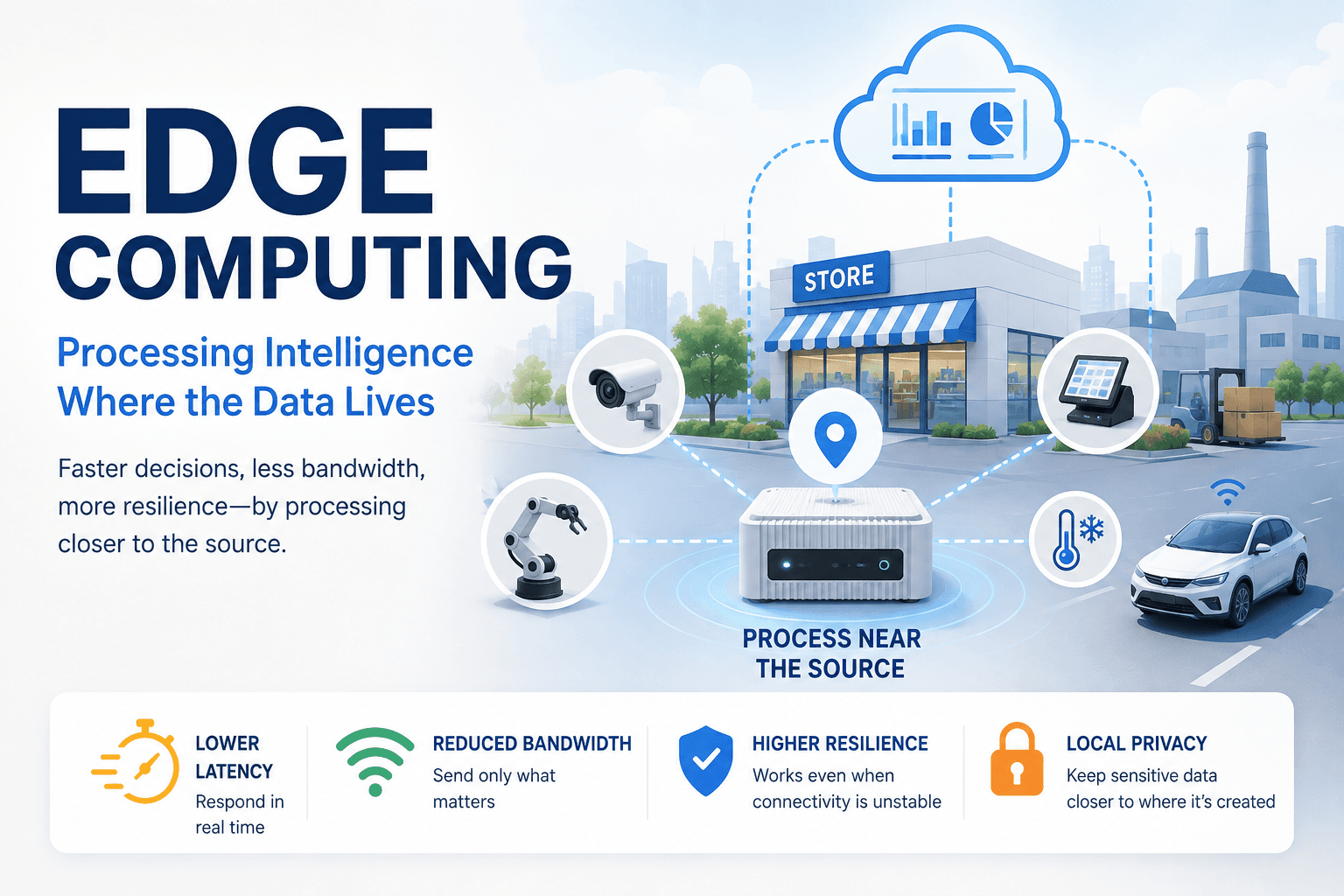
Most analytics architectures assume data should move to a central platform before anything useful happens. Edge computing challenges that assumption by moving selected processing closer to where data is created. It can reduce delay, limit unnecessary data movement, keep systems useful when connections are unreliable, and improve what eventually reaches the BI layer. The important question is not whether edge computing is better than centralized analytics. It is deciding which work belongs where.