Do we still need to spend heavily on infrastructure before we can see a real business impact from AI?
And does every new idea need another server, another environment, more configuration, and a team to keep everything running before the first user can even try it?
Not necessarily.
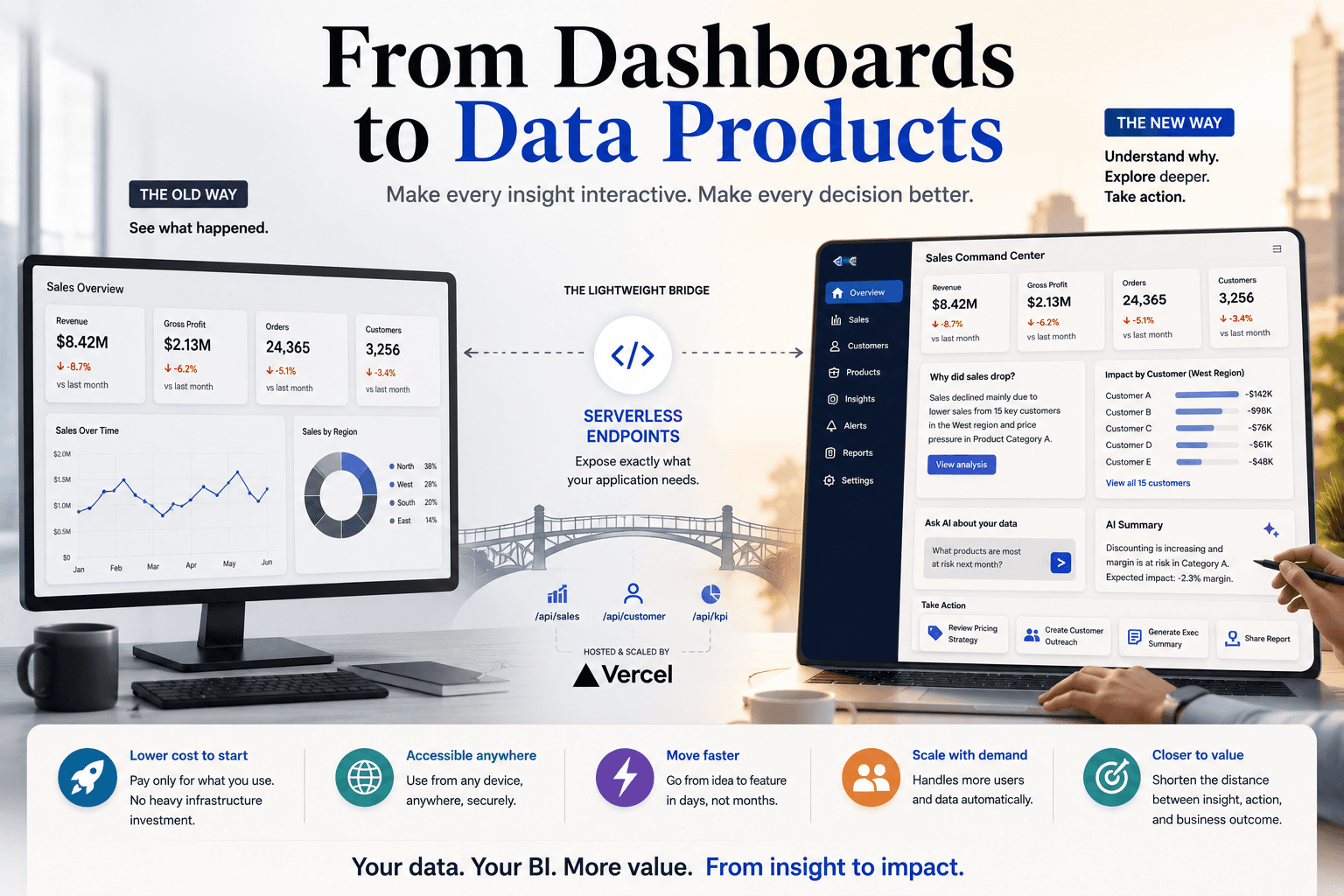
One of the changes making this possible is the rise of serverless endpoints. The name can sound more complicated than the idea actually is. An application may need a specific function, such as retrieving sales, loading a customer profile, calculating a KPI, or sending a question to an AI model. Instead of building and managing a traditional application server around every one of those functions, we can expose them through endpoints such as `/api/sales` or `/api/customer`, while a platform runs the required code when the request arrives.
There are still servers somewhere, of course. "Serverless" does not mean servers disappeared. It means we are no longer responsible for managing them in the traditional way for every application function.
Platforms such as Vercel have made this model particularly accessible because the application, APIs, deployment, and scaling can sit much closer together.
For BI, this creates an interesting opportunity.
BI Does Not Need to End at the Dashboard
The traditional BI journey often looks something like this:
Data → Data Warehouse → Dashboard
There is nothing wrong with that architecture. In fact, for many reporting requirements it is exactly what the business needs.
SQL Server may hold and transform the data, Power BI or Tableau may visualize it, and the user receives a dashboard showing sales, profitability, inventory, customers, or whatever else needs to be monitored.
The limitation begins when the user wants to do something beyond looking.
Imagine that a sales director sees revenue declining in one region. The dashboard can show the decline clearly, perhaps even highlight the products and branches involved, but the next questions often require moving somewhere else. Which customers caused most of the drop? Was the decline driven by lower quantities or lower prices? Is the same pattern appearing elsewhere? What changed compared with the previous period?
Once the experience becomes interactive, the architecture can start looking different:
Data → Data Warehouse → API → Application
Vercel can sit in that application layer, exposing serverless functions that retrieve the right information and present it inside a web application rather than limiting the user to a predefined report.
The Data Warehouse still does what it does best. BI still provides the analytical model and business definitions. The difference is that the user now has another way to interact with them.
An API Can Turn a Metric Into a Conversation
Suppose the application shows that sales are down 8%.
That number may come from exactly the same SQL model behind an existing BI dashboard, but an application can do more with it.
The manager could open the KPI and immediately see which branches contributed most to the decline, select one branch and inspect the customers behind it, then ask an AI assistant to summarize what changed.
The application might use one endpoint to retrieve the sales movement:
`/api/sales`
another to retrieve customer details:
`/api/customer`
and another to send the relevant business context to an AI model:
`/api/analyze`
From the user's perspective, this feels like one experience. Behind it, each function has a clear responsibility.
This is where serverless endpoints become much more interesting for BI. They are not simply a cheaper way to host some code. They can become the bridge between analytical data and an application that people can actually interact with.
AI Makes That Application Layer More Valuable
AI adds another reason why this architecture matters.
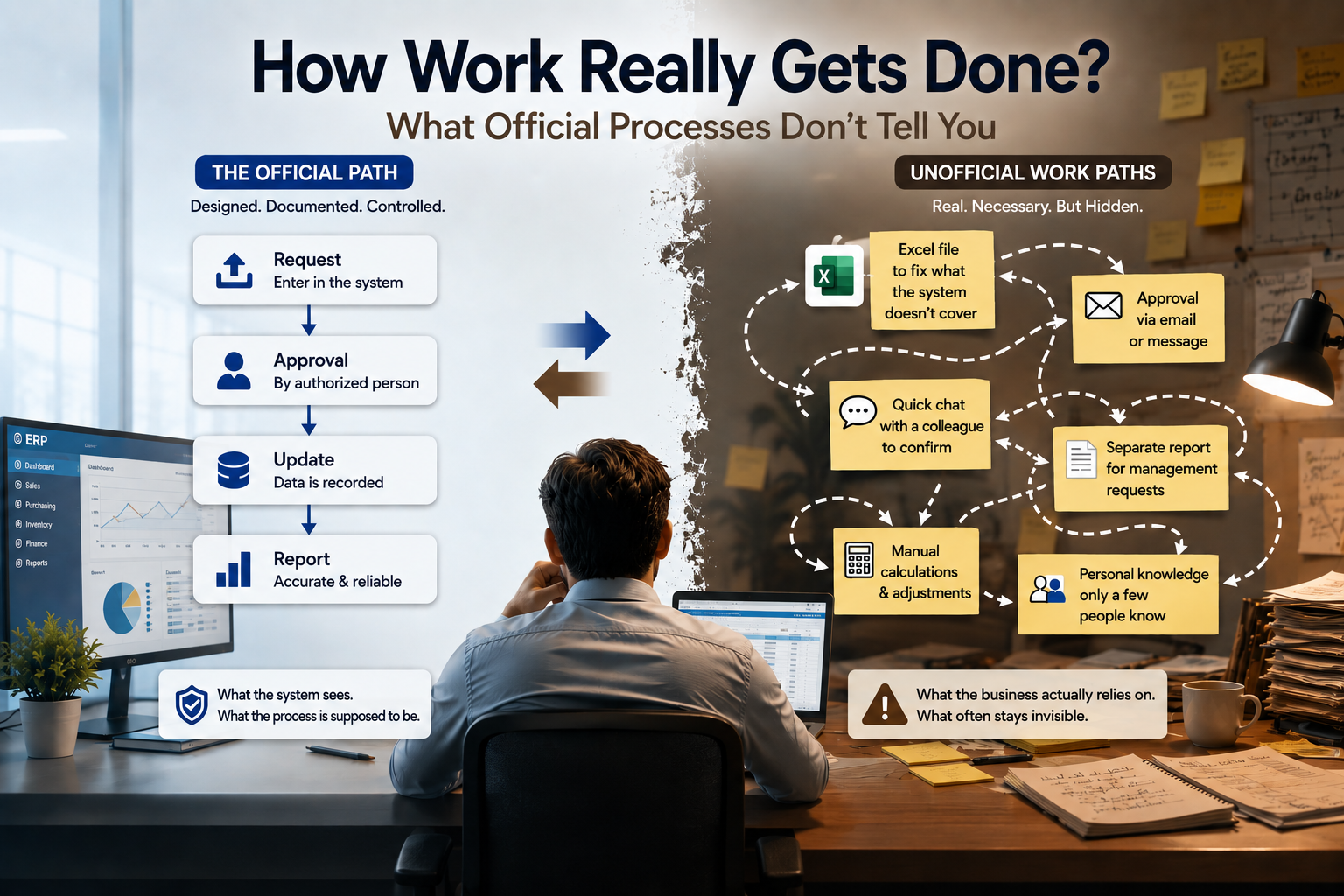
A traditional dashboard is usually designed around questions we anticipated when the dashboard was built. We decide which KPIs to show, which filters to provide, and which drill-down paths users may need.
AI changes part of that relationship because the next question does not always have to be designed in advance.
A manager could open a sales application and ask:
"Why did the West region decline this month?"
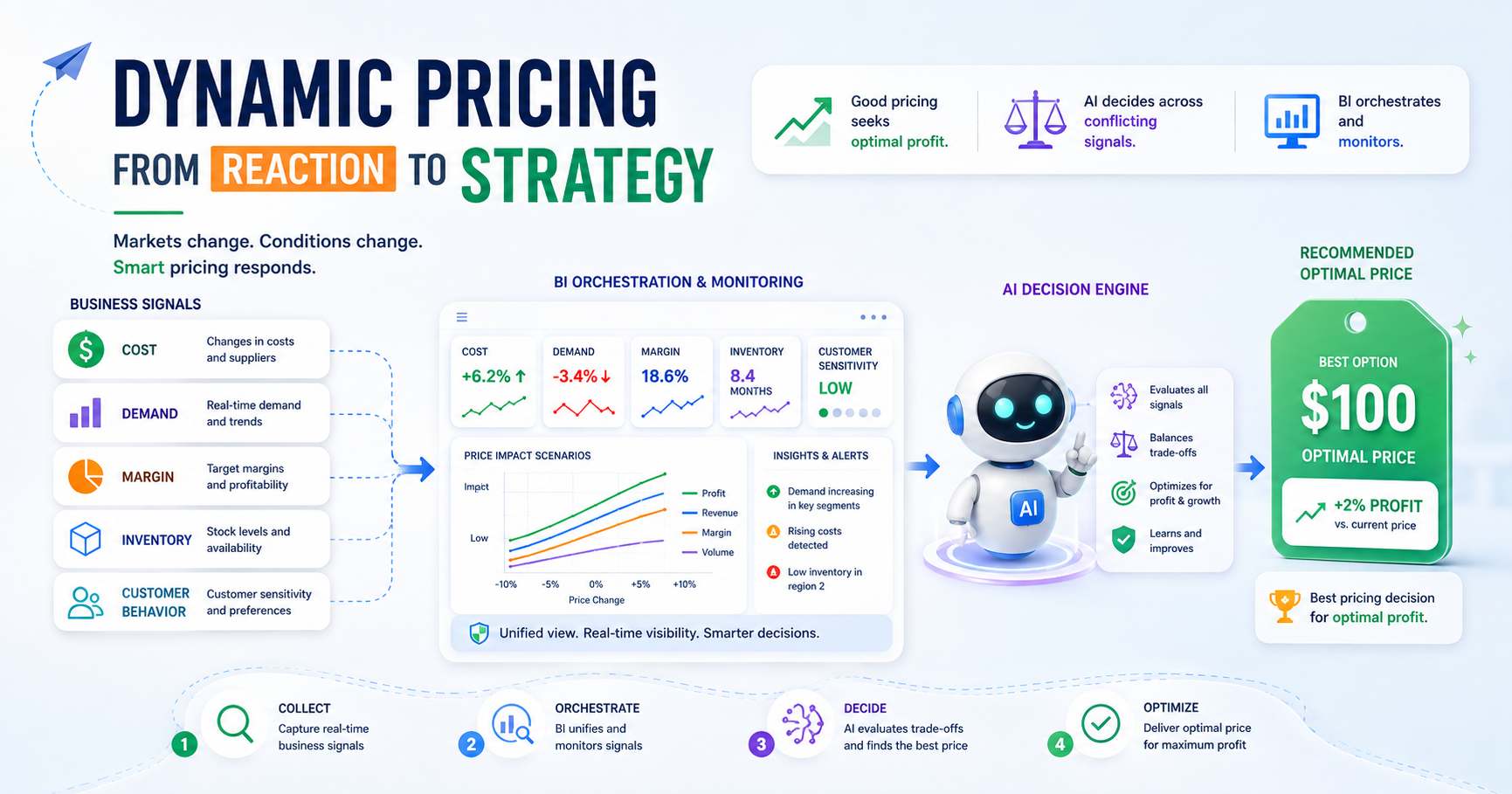
The application can retrieve the relevant sales, products, customers, and historical comparison through its APIs, then give that structured context to the AI model. Instead of asking the model to guess from a vague question, we give it the actual business data needed to explain what happened.
The next question could be:
"Which customers should I investigate first?"
The system already has the context, so it can continue the analysis without forcing the manager to move between dashboards, Excel files, reports, and a separate AI tool.
This changes AI from something sitting beside BI into something that can operate inside the analytical experience itself.
The Architecture Becomes More Flexible
A useful way to think about the architecture is:
Data → Data Warehouse → APIs → Application → User
BI remains underneath the experience, providing trusted data, metrics, business logic, and analytical models.
The APIs expose specific capabilities.
Vercel hosts the application and executes the serverless functions.
AI can then use those same capabilities to analyze, summarize, explain, or support a decision.
That separation matters because the application does not need direct knowledge of everything inside the database. It asks for what it needs through a controlled function.
For example, `/api/customer-profitability` might return customer revenue, cost, margin, outstanding balance, and recent activity without exposing the entire financial database to the browser.
The application becomes easier to develop because each function has a clear purpose, while the data layer remains governed separately.
The Business Benefit Starts Before AI
It would be easy to make this discussion entirely about AI, but some of the strongest advantages exist even without it.
The first is lower infrastructure commitment at the beginning.
A small internal application does not necessarily need a dedicated web server, a carefully sized machine, and an infrastructure project before anyone knows whether the idea is useful. The team can build the function, deploy it, and let the platform handle much of the execution environment.
The second is accessibility. A browser-based application can be used from a laptop, tablet, or phone without requiring users to sit inside a traditional reporting environment.
The third is agility. If tomorrow the business wants a customer-details page, an approval action, an AI summary, or another analytical feature, that capability can be added to the application without redesigning the entire BI platform.
Scaling also becomes more closely related to actual use. An application that receives a handful of requests does not need to be designed around the same infrastructure assumptions as one receiving thousands.
This changes the economics of experimentation. The cost of trying a useful idea can become much lower than the cost of building a complete traditional application environment before the idea has proved its value.
But Serverless Does Not Remove the Data Architecture
There is an important boundary here.
Putting an application on Vercel does not magically make every database available to it.
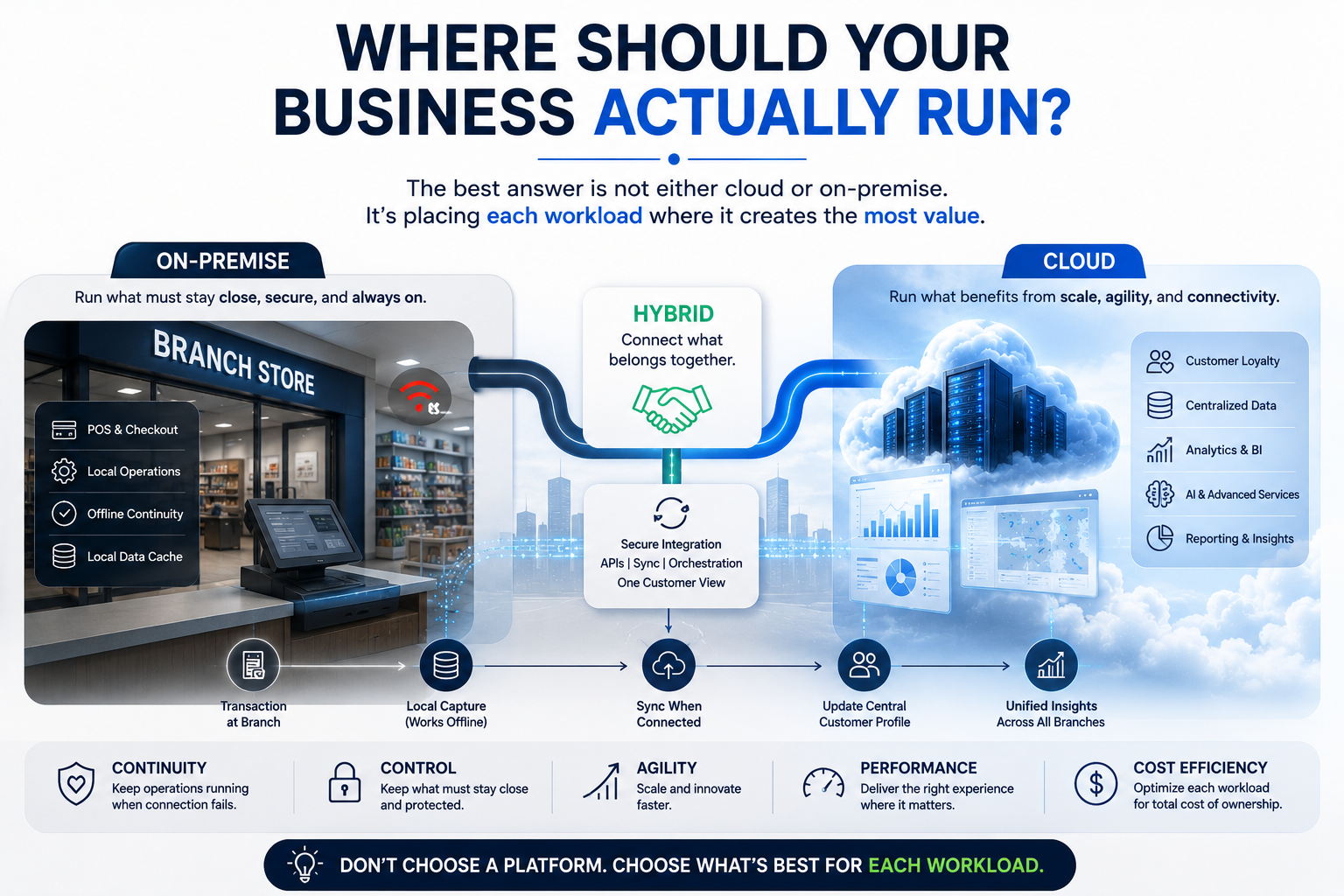
If SQL Server is running on-premises inside the company network, for example, the application still needs a secure way to reach the required data. That may involve an existing API, a secure gateway, a private network connection, or another controlled integration layer.
This is actually a useful constraint because the application should not simply expose a production database directly to the internet.
The serverless layer changes how we build and run the application functions. It does not remove the need for security, data governance, authentication, business rules, or a well-designed data platform underneath them.
That is also why I do not see Vercel as a replacement for SQL Server, Power BI, Tableau, or the Data Warehouse.
It solves a different part of the problem.
BI Can Become a Data Product
This is the bigger idea.
For years, BI has often been delivered as something people look at. We build the Data Warehouse, define the KPIs, create the dashboard, publish it, and the user consumes the information.
But many business problems do not end with seeing the information.
A credit manager may need to investigate the customer behind an exposure figure. A sales manager may want to understand why performance changed and immediately review the affected accounts. A finance manager may want an explanation of a variance and then generate a management summary. An operations manager may need to move from identifying an exception to taking an action.
Once these capabilities are brought together, BI begins to look less like a collection of dashboards and more like a data product.
The dashboard may still exist inside it, but it becomes one part of a larger experience that can combine visualization, detailed data, workflows, AI, alerts, reports, and business actions.
Serverless endpoints make this easier because those capabilities do not have to be built as one enormous application from the beginning. They can be introduced function by function as the business need becomes clear.
The Real Change Is the Distance Between an Idea and Its User
This is where I see the strongest business value.
The important question is not whether Vercel is better than a traditional server, or whether serverless should replace every existing architecture. In many established systems, a traditional environment will continue to make perfect sense.
The more interesting question is how much infrastructure should stand between a useful idea and the person who needs it?
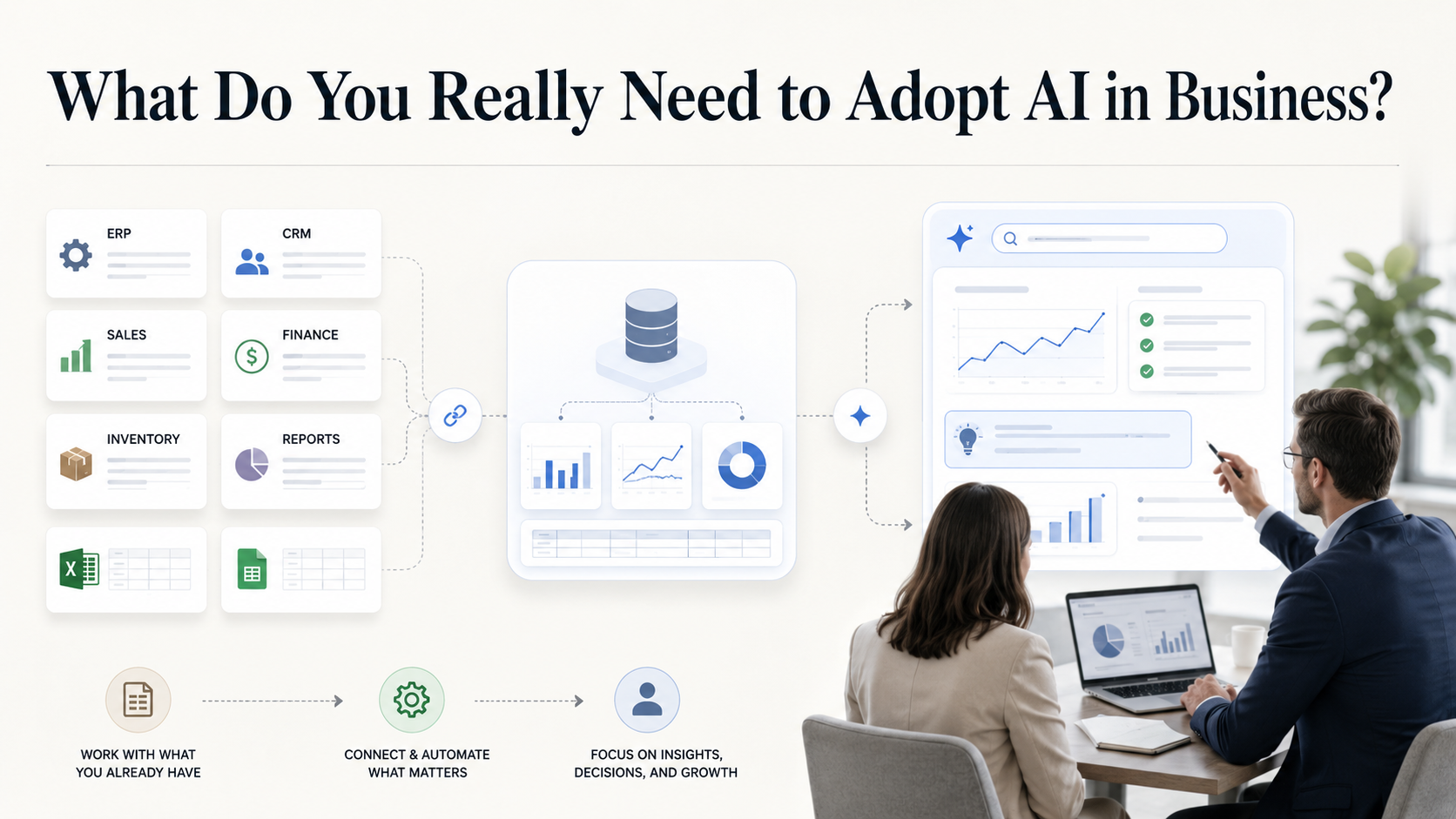
If a company already has trusted data in SQL Server and a mature BI layer, adding an AI-enabled application should not automatically mean starting another large infrastructure project.
Sometimes the existing data foundation is already enough.
What is missing is a lightweight application layer that can expose the right information, add interaction around it, connect AI where it creates real value, and make the result accessible to users.
That is where platforms such as Vercel become interesting for BI.
Not because they replace Business Intelligence, but because they can help us take what BI already knows and turn it into something people can explore, question, and use.
The journey no longer has to stop at:
Data → Warehouse → Dashboard
It can continue:
Data → Warehouse → API → Application → AI → Decision
And that last part may be where much of the next value from BI is created.