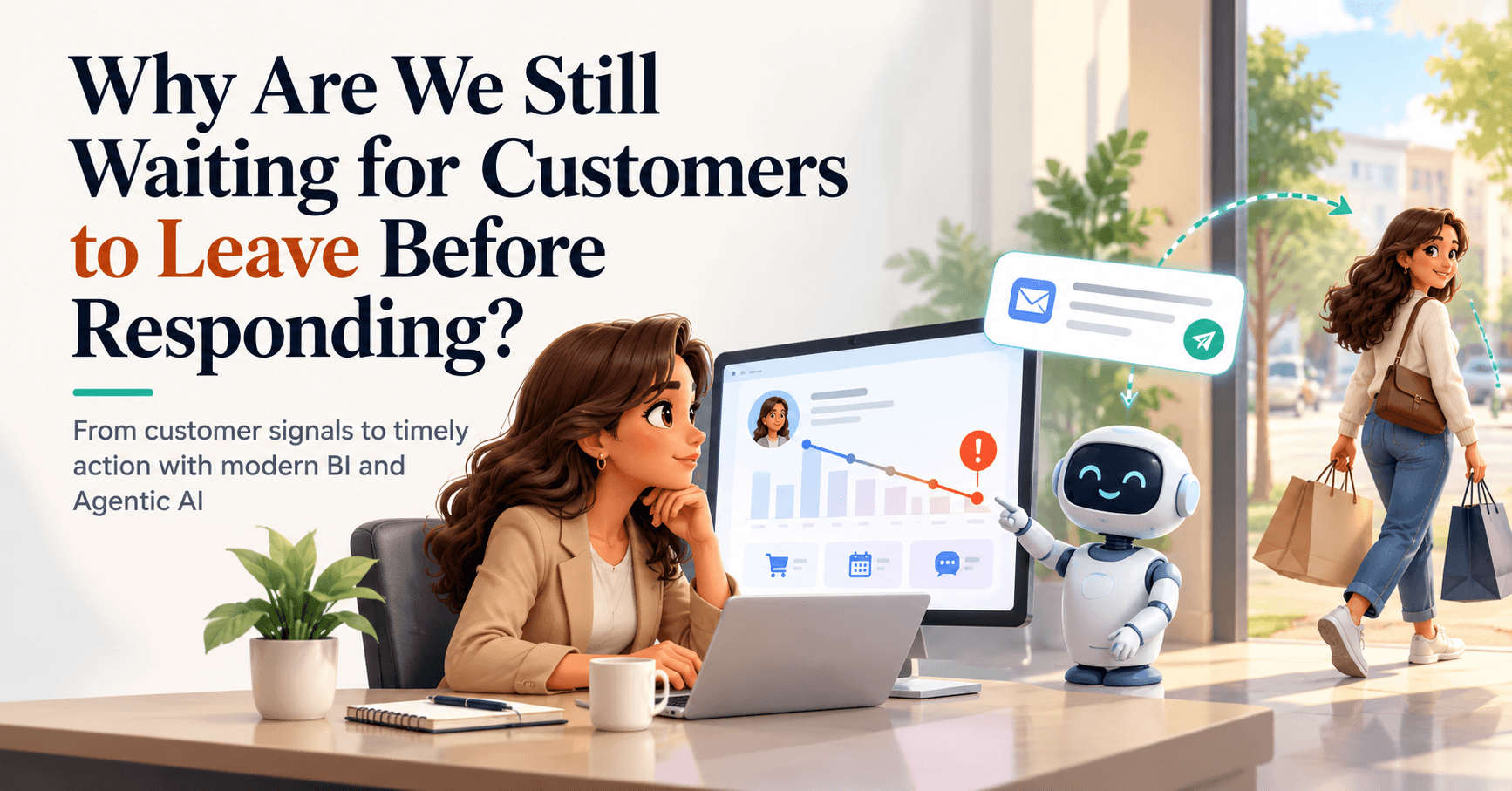
Imagine a customer who has bought from you almost every month for two years, usually returning within a familiar window and often choosing from the same part of your business. Then the pattern begins to stretch: what used to be four or five weeks becomes seven, then nine, yet nothing appears obviously wrong because there is no cancellation to record and no complaint asking for attention.
By the time someone eventually notices that this familiar customer has disappeared from the normal flow of business, the important change may have happened months earlier. She did not suddenly become a lost customer on the day the report classified her that way; the relationship had been changing gradually while the business continued to treat each quiet week as nothing more than another week.
That is the uncomfortable part of customer churn: in many businesses, the customer changes before the business notices. We are often very good at explaining who left after the pattern has become undeniable, while being much less prepared to recognize the smaller changes that appeared while there was still a relationship worth protecting.
The customer usually changes before the report does
Most businesses have become reasonably good at looking backward, which is exactly what traditional reporting was built to do. We can see what we sold last month and compare customers by revenue, while retention reports can tell us who has not purchased for a defined period, but those measures become most certain only after enough time has passed for the change to become visible.
Customer relationships rarely move according to such clean boundaries. Someone who normally buys every four weeks may begin returning every seven, while another customer's usual category may quietly disappear from their purchases, and neither change proves that the relationship is ending even though both may matter when compared with what has historically been normal for that customer.
This is where modern Business Intelligence becomes more useful than simply producing another retention dashboard. Instead of waiting until someone satisfies a rule such as "no purchase for 90 days," the business can begin comparing current behavior with the customer's own history and asking whether something meaningful has started to change while there may still be time to respond.
The analytical idea behind this has existed for years, particularly in businesses where customers do not formally cancel anything when they stop buying. What is becoming more practical now is bringing that thinking into everyday operations, so the signal does not remain buried inside a specialist model until somebody eventually turns it into a quarterly presentation.
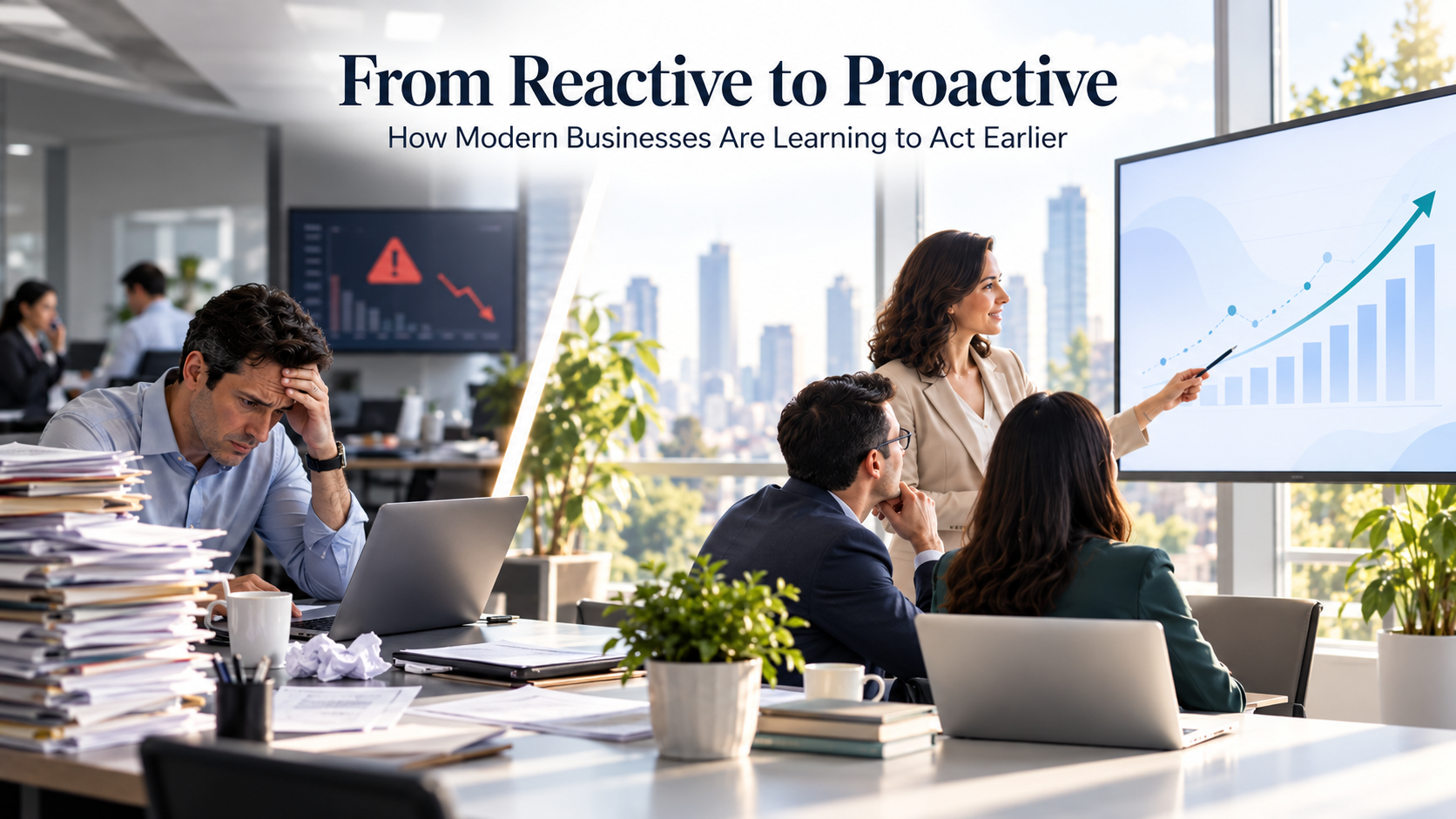
The important shift is from asking who has already gone to noticing whose relationship is beginning to look different. That sounds like a small change in wording, but operationally it moves customer analytics from explaining an outcome toward recognizing a developing situation.
A valuable customer is more than the last transaction
Recognizing change early only matters if the business also understands which relationships deserve attention, and this is where another weakness in traditional customer reporting appears. The person who spent the most last month may be important, but that single transaction tells us very little about what the relationship could still be worth over the years ahead.
Customer equity approaches the problem differently by treating the customer base as a long-term business asset rather than as a collection of separate sales. A customer who returns consistently and is likely to continue buying may represent far more value than the order currently visible on the screen, while another customer may matter partly because people trust their recommendations and new business repeatedly follows from them.
That difference becomes increasingly important once technology starts helping the business decide where to intervene. If the system understands customer value only as recent revenue, it can become very efficient at protecting the biggest recent buyer while overlooking someone whose relationship is quieter but potentially much more valuable over time.
This does not mean every company needs a complicated customer valuation model before it can respond to changing behavior. It means the definition of a valuable customer needs to be thought through before we ask technology to make decisions about whom the business should protect, because automation magnifies whatever definition sits underneath it, whether that definition is intelligent or badly designed.
Knowing earlier still does not mean responding earlier
Suppose the business can now see that our customer's behavior has changed and that the relationship is worth protecting. The analysis has improved considerably, yet from the customer's point of view nothing is different because somebody still has to notice the signal, understand enough of the surrounding situation and decide whether any response would actually help.
In a small business this gap may be almost invisible because an owner or salesperson personally knows many of the customers. In a larger organization the same signal can remain in a dashboard until someone has time to investigate it, and by the time the insight becomes an action, the useful moment may already have passed.
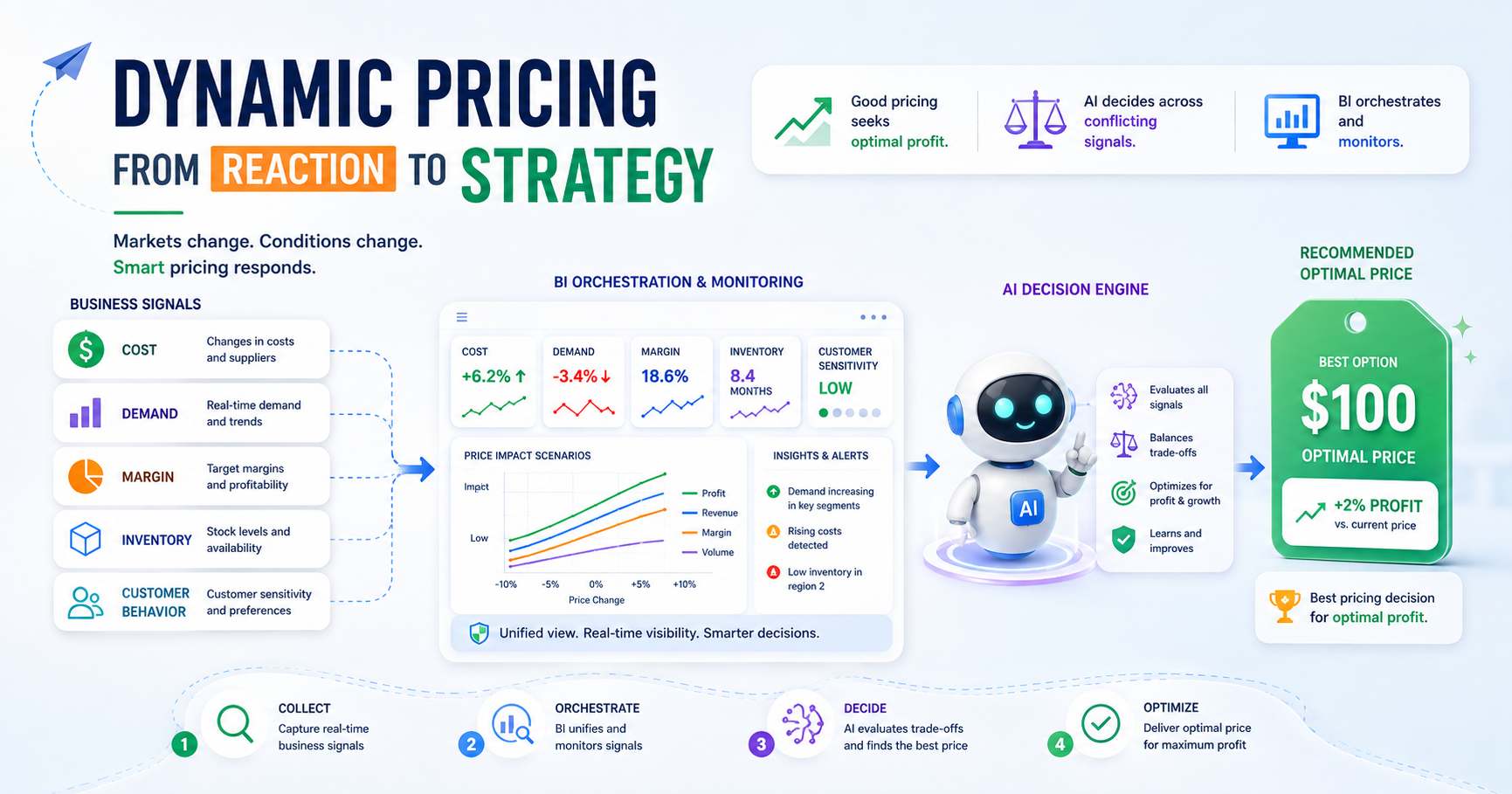
This is where the conversation begins moving beyond Business Intelligence alone. Modern BI can help the business notice the change earlier, while Agentic AI can begin helping the business move from that signal toward an appropriate next action, which is much easier to understand if we think of it as closing the distance between knowing and doing rather than as introducing another AI technology.
Our customer, for example, has not purchased for ten weeks, but that fact by itself should not automatically produce a discount. If her usual product was unavailable during the period when she normally buys, telling her that it is available again may be far more useful, while an unresolved service issue would require a very different response because another promotional message could make the situation worse rather than recover the relationship.
The value of AI here is therefore not that it can send a message faster than a person. Its more interesting role is helping bring enough customer context into the moment of decision so the response reflects what may actually be happening instead of treating every decline in activity as the same problem.
When the system can move beyond the dashboard
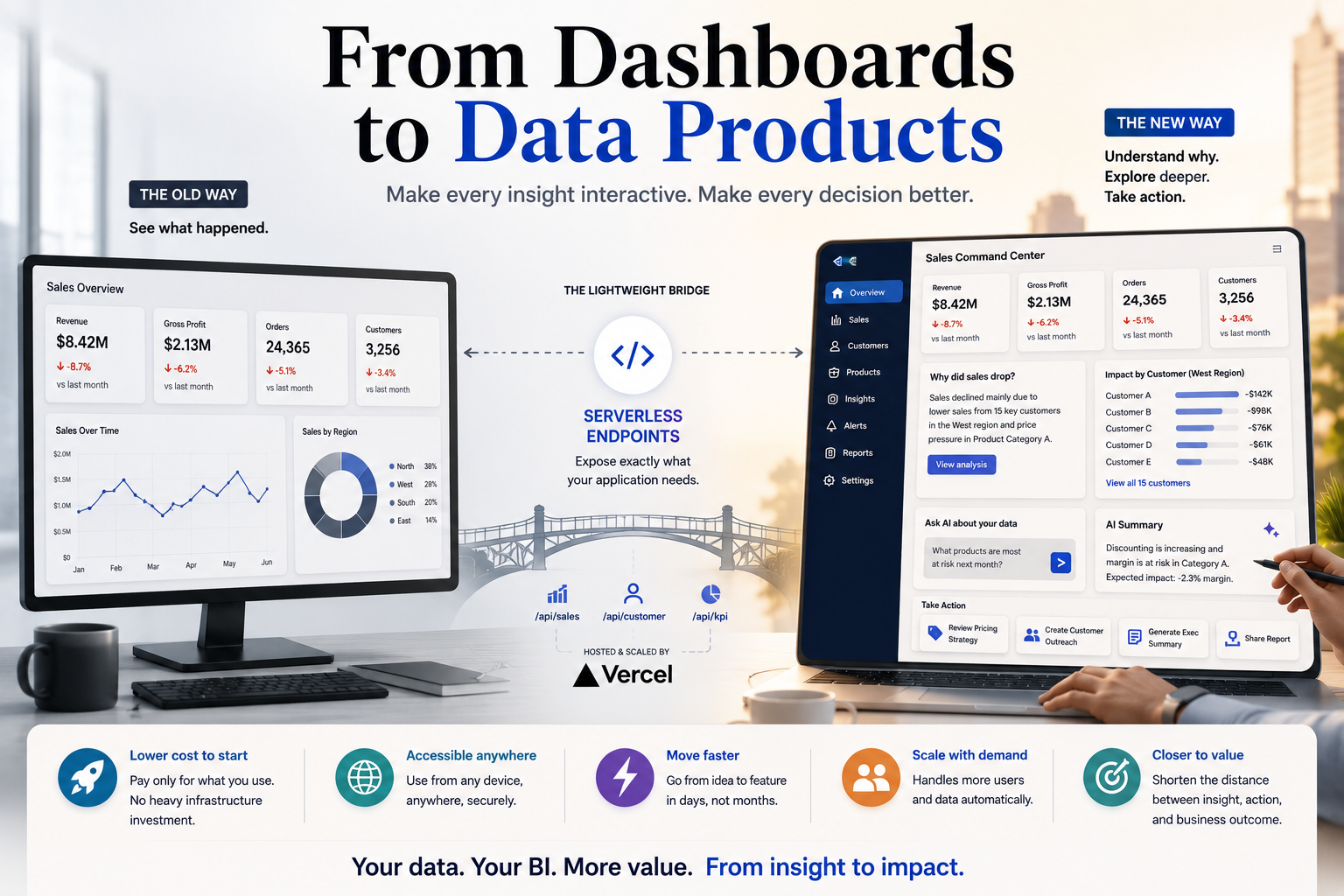
For years, most customer analytics naturally ended with a person because the report and the action were separate. The dashboard could show a changing pattern clearly, but someone still had to carry that observation into another system or workflow before anything reached the customer, which meant that good insight did not automatically become timely action.
Agentic AI begins to change that boundary because the system can potentially participate in the next step rather than stopping at the recommendation. Once the business has reliable customer context and clear limits around what can happen automatically, a routine response may move forward without waiting for someone to manually transfer the insight into action, while decisions with greater commercial consequences can still remain under human review.
This is why I think the conversation about AI agents should begin with the business decision rather than with the agent itself. Before asking what an AI system can automate, the better question is what information would make this decision sensible and how much authority the business is genuinely comfortable giving the system when that situation occurs.
Seen that way, Agentic AI becomes much less mysterious. The dashboard is no longer only a place where somebody eventually discovers that customers have already left; it becomes part of a broader decision process where changes can be noticed sooner and, when the situation is sufficiently clear, connected to an action before the relationship has already disappeared.
The dashboard tells us something is changing, but the real business value begins when that knowledge reaches the customer at the right moment. That is where analytics starts moving from observation toward operational response.
Acting faster does not automatically mean acting better
There is a danger in closing this gap too aggressively because an automated response can be wrong just as easily as a manual one, and it can be wrong at a much larger scale. If every decline in activity produces a discount, the business may gradually teach customers that waiting is rewarded, while frequent automated outreach can turn a retention system into another reason for customers to disengage.
The quality of the action depends heavily on the quality of the context behind it. Someone affected by unavailable stock should not be treated like a customer whose relationship weakened after poor service, and neither situation becomes clearer simply because an AI system can react within seconds.
This is where human judgment continues to matter, although not necessarily by requiring a person to approve every small customer action. The useful boundary is between situations where the business already understands the appropriate response well enough to let the system proceed and situations where uncertainty or commercial consequence makes human review worthwhile.
The purpose is not automation for its own sake; the purpose is to respond sooner without becoming careless simply because responding has become easier. That distinction becomes more important as the system gains greater freedom to act on behalf of the business.
From customer reporting to customer responsiveness
The most interesting development here is not that AI can write a more personalized marketing message, because businesses have been automating communications for years and sending more messages has never been the same thing as understanding customers better. The deeper change is that customer information can increasingly be used while a relationship is still changing, giving the business an opportunity to respond before the final outcome appears neatly in a retention report.
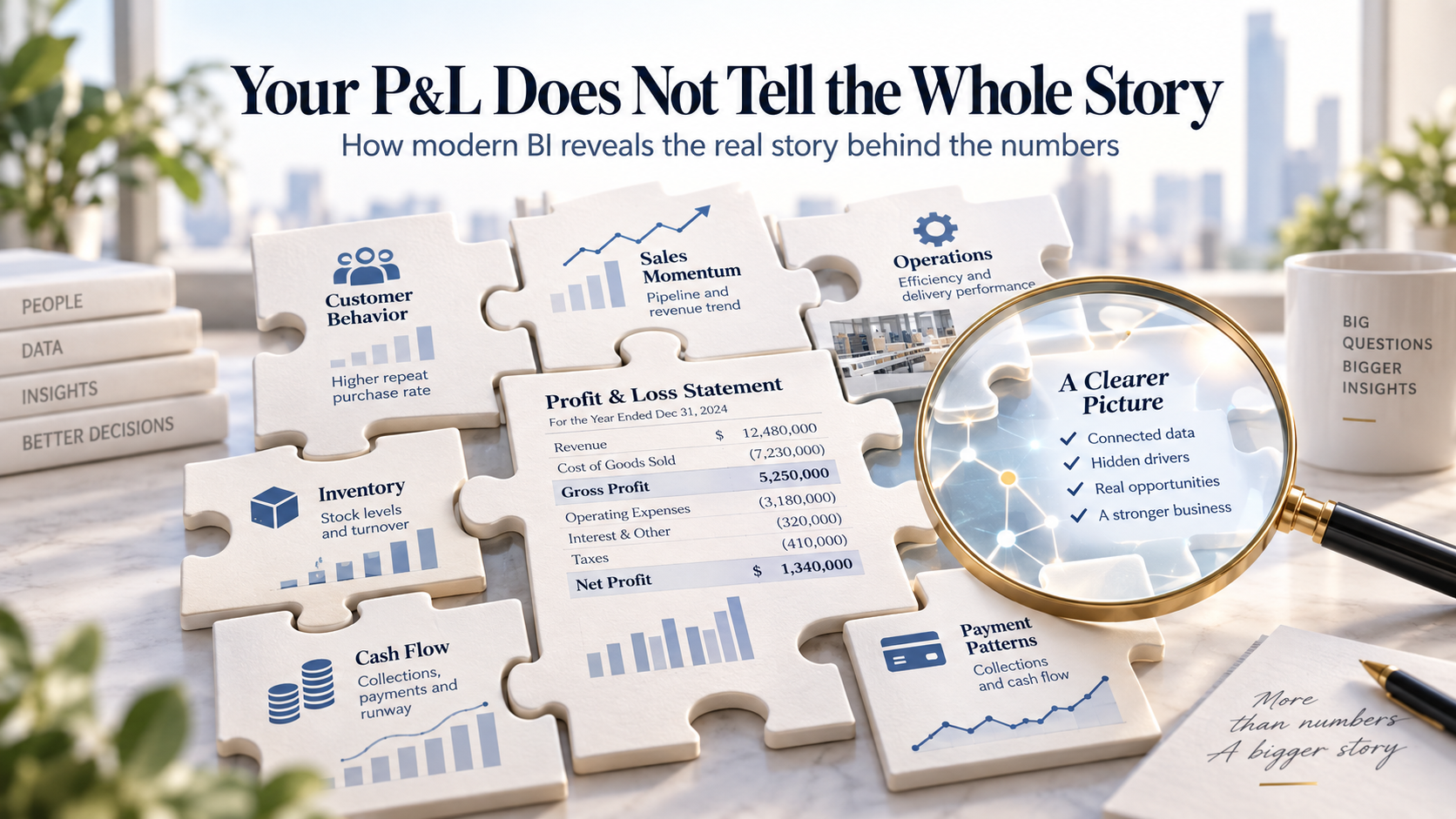
Modern BI makes that earlier change easier to see, while a clearer understanding of customer value helps the business decide which relationships deserve attention. Agentic AI can then reduce some of the operational delay between the signal and the response, provided that the business has already defined what the system should know and what it should be allowed to do.
This also changes the question managers can ask of customer analytics. For a long time the ambition was to identify who might churn with greater accuracy, but once the business becomes capable of responding earlier, the more useful question becomes whether those interventions actually protected valuable relationships that otherwise might have been lost.
That is a much more demanding standard because it asks analytics to contribute to an outcome rather than merely describe a risk. It also brings the discussion closer to the business itself, where the important question is no longer whether the model produced an impressive churn score but whether recognizing the change earlier gave the organization enough time to do something worthwhile.
There is still important work behind that idea because customer information needs enough context to support a sensible decision, while the business must decide which actions can happen automatically and which ones deserve review. The eventual result also needs to return into the process so the organization can learn whether its response actually helped rather than simply assuming that action equals success.
For many businesses, the next advantage in customer analytics may not come from becoming better at explaining why customers left, but from becoming better at recognizing when a valuable relationship is changing while there is still time to influence what happens next. That moves the conversation away from another retrospective dashboard and toward a business that becomes more responsive to the customers it already has.
If the signals are increasingly available and the technology is becoming capable of helping us interpret and act on them, then waiting until the customer has already disappeared begins to look less like a limitation of the data and more like a gap between what the business knows and what it is prepared to do with that knowledge. That is why the question in the title is becoming harder to ignore: why are we still waiting for customers to leave before responding?