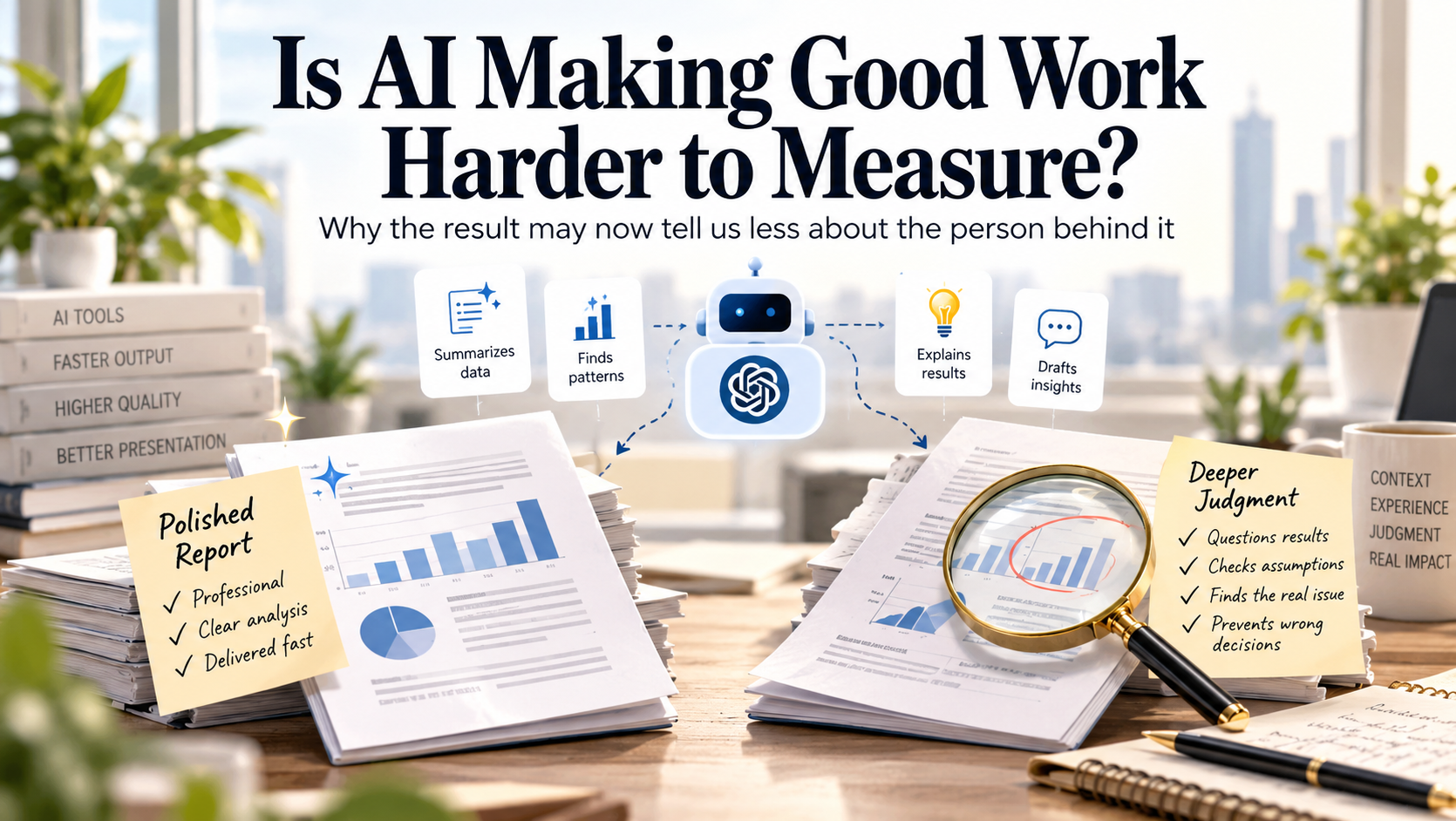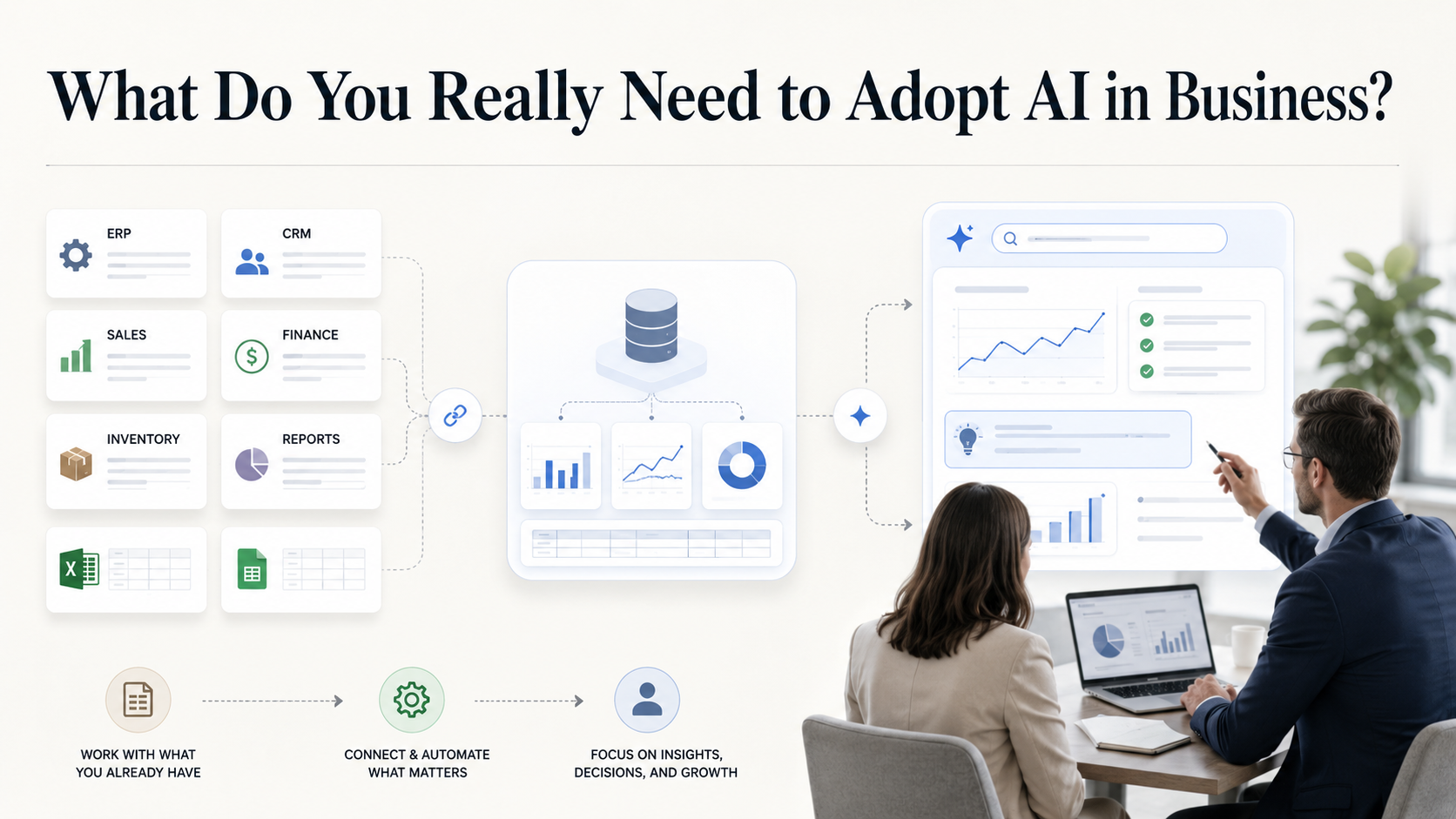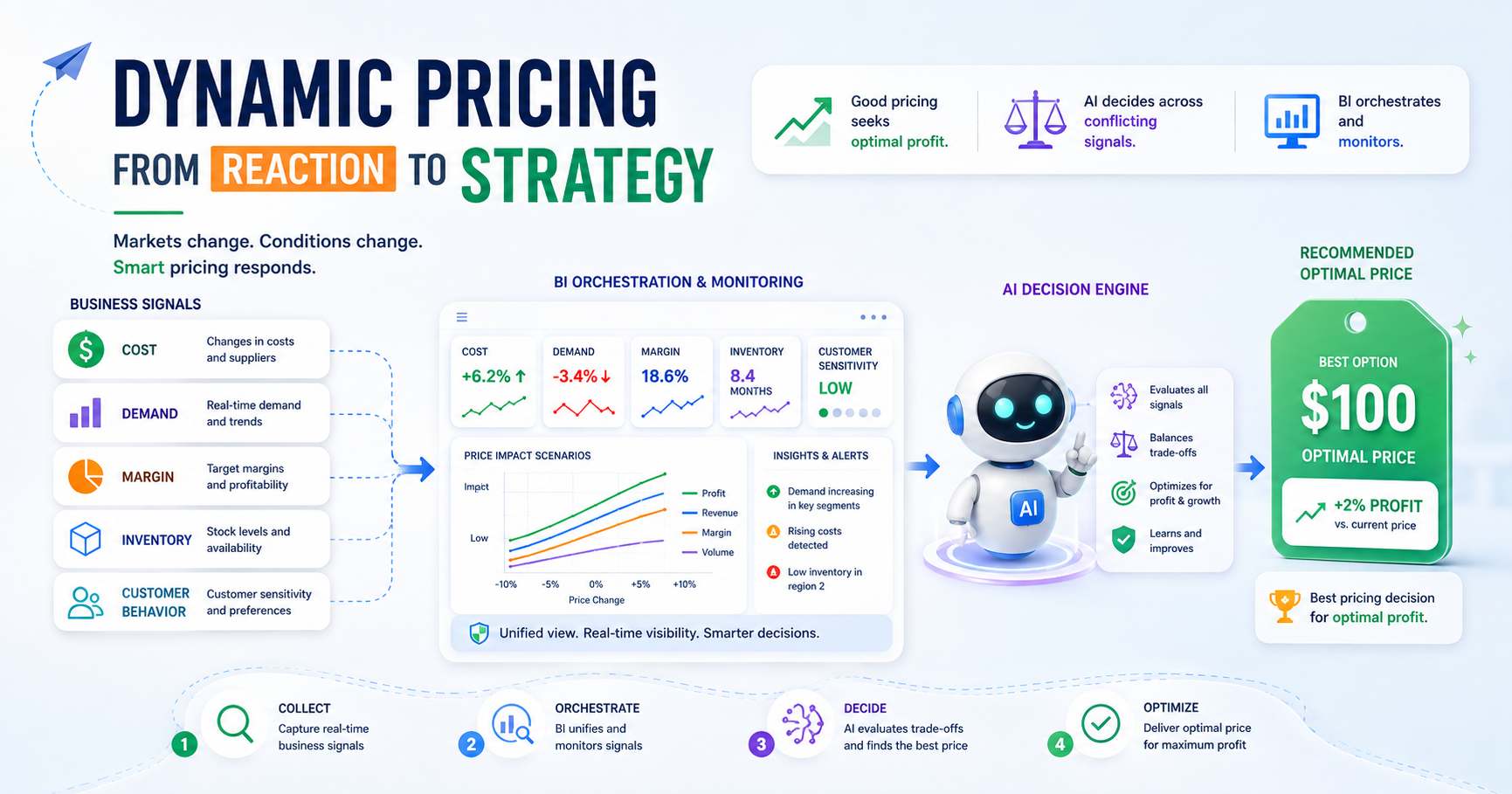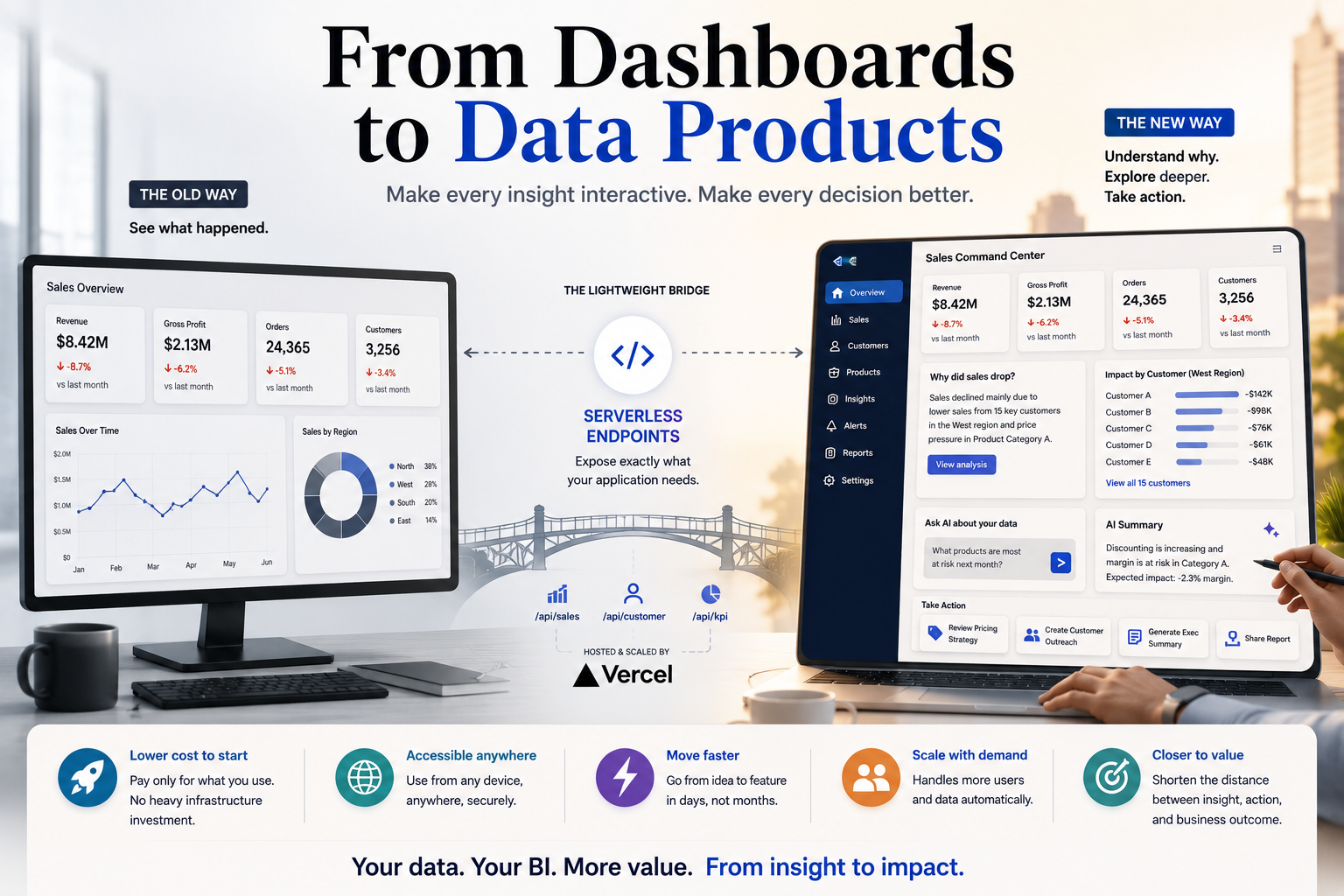
Imagine a market a few years from now where every serious competitor has already adopted AI, not experimentally and not through a few employees opening ChatGPT whenever they remember, but deeply enough that the technology has become part of normal business. Their analysts reach useful answers faster, customer teams understand behavior more clearly, managers have better information when a decision needs to be made and many of the repetitive tasks that once consumed hours now happen in minutes.
Some companies will never make that transition, although I do not think they are the interesting part of this story because we can already guess what happens to them. If an entire market learns to operate with a new level of speed and intelligence while one competitor continues working as before, eventually that company is not protecting an old way of working, it is simply carrying a disadvantage that becomes harder to defend.
The more interesting question begins among the companies that did get AI right. Let us assume they all became faster, their analysis improved and their customers are already seeing the benefit, because once we remove adoption failure from the discussion, we are left with a much harder business question: if everybody has access to increasingly similar intelligence and automation, who actually turns it into an advantage that lasts?
Here we might get surprised, because the first answer many businesses will naturally see is cost. If AI allows the same amount of work to be completed with fewer hours, reducing payroll can create a very visible gain almost immediately, while another company may take exactly the same productivity improvement and ask a completely different question: what could we now afford to do that was too expensive, too slow or simply impossible before?
Both companies got AI right, yet they may be building two very different futures from the same productivity gain.
When AI becomes the baseline
We can already see the beginning of that world. McKinsey reported in 2026 that 89% of organizations were regularly using AI in at least one business function, while only around 6% qualified as AI high performers, so widespread adoption and significant business impact are clearly not arriving at the same pace.
PwC reached a similar point from another direction, since more than half of the CEOs in its 2026 global survey said they had not yet seen significant revenue or cost benefits from AI. What interests me here is not the exact percentage itself, because those numbers will certainly move as adoption matures, but the gap behind it: using AI and creating financial value from AI are clearly not the same achievement.
And this gap may become more important as access becomes easier. There was a time when sophisticated enterprise technology could itself separate a large company from smaller competitors because implementing it required major infrastructure, years of integration and enough capital to survive the process, while today a much smaller company can access remarkably capable AI through the same cloud infrastructure used by companies many times its size.
The comparison with electricity is not perfect, although it helps us think about what happens when a transformative technology stops being rare. Reliable electricity once changed what a factory could produce, yet nobody today presents electricity as a competitive strategy, because eventually the capability becomes part of the environment in which everybody operates.
I suspect AI will gradually follow part of that pattern. It can become more important to running a competitive business while, at the same time, becoming less useful as an explanation for why one company wins over another.
Productivity happens inside the company, but value is decided in the market
Suppose a professional services company once needed four hours to prepare a client proposal and, after improving its AI-assisted workflow, the same work takes two. From inside the company the result looks excellent because the productivity gain is easy to see, although the more interesting question begins when we ask what happened to those two hours afterward.
For a period, the company may respond to customers much faster than competitors and enjoy a genuine advantage, yet once everyone around it develops the same capability, same-day proposals can simply become the new expectation. The company still became more productive, so nothing about the improvement was imaginary, but some of that value may have moved toward the customer through better service or into the market through competitive pressure.
That is why I would be careful whenever productivity and profit are spoken about as if they were the same thing. Productivity tells us that less time or fewer resources are required to produce something, while profit depends on whether the company can actually keep part of that improvement rather than watching it disappear into lower prices, higher customer expectations or capacity that nobody knows what to do with.
We have seen versions of this before. Spreadsheets eliminated enormous amounts of manual work and email transformed the speed of business communication, although today nobody pays a company a premium because its employees know Excel or because an email arrives instantly, since both eventually became part of what customers simply expect from a functioning business.
AI may move through this cycle even faster because competitors do not need to rebuild the underlying technology themselves. If one company discovers that a widely available model can prepare a first draft, summarize a report or accelerate routine analysis, another company can discover the same capability surprisingly quickly, which means being first still matters, but being first should not automatically be confused with having built something difficult to copy.
The first financial answer is sitting on the payroll line
Once AI begins releasing a meaningful amount of employee time, it is completely understandable that management looks toward payroll because the saving is concrete and easy to explain. If work that once required ten people can eventually be completed by eight, the cost of two positions is visible immediately and nobody has to wait to find out whether a new product will succeed or whether additional capacity will actually bring another customer.
There are situations where that is absolutely the right decision, especially when the organization genuinely carries excess cost or when technology has removed work that no longer justifies the resources behind it. I do not think the interesting argument is whether companies should or should not reduce headcount, because that turns a business question into an ideological one and misses the more important issue.
In my opinion, the important idea here is what happens when reducing payroll becomes the definition of AI value instead of one possible use of the productivity AI creates. Cost reduction has a natural limit because once a cost disappears, the same cost cannot be removed again next year, while capacity used to create something new may continue producing value well after the original productivity improvement was captured.
At that point another company might look at the same released hours and ask whether they can serve more customers without increasing cost at the same pace, whether a service that was previously too expensive can now be offered profitably, or whether a market that required too much manual effort has suddenly become attractive.
Both management teams would be acting rationally, although one is mainly asking how much of today's business can be removed from the cost base, while the other is asking what tomorrow's business could look like now that some of today's effort has disappeared.
Here the research becomes more interesting
BCG's 2026 work on AI leaders caught my attention because it complicates the simple story that the most advanced AI companies should naturally be the ones cutting employment most aggressively. Its analysis identified only around 6% of companies as AI leaders, yet those businesses were outperforming the median by roughly nine percentage points in industry-adjusted shareholder returns.
What surprised me more was the employment side. The leaders were increasing headcount at a roughly three percentage point higher compound annual growth rate than the median company, while BCG described the reinvestment of AI-driven productivity into growth and new opportunities as one of the characteristics separating them from the rest.
That does not mean hiring people causes AI success, and it certainly does not mean every role should be preserved regardless of how technology changes the work. What it does make harder to defend is the assumption that the strongest possible return from AI must come from shrinking the workforce as quickly as productivity improves.
PwC's findings add another piece to the same picture, since only 12% of CEOs in its 2026 survey reported both revenue and cost benefits from AI, while stronger performers were more likely to have pushed AI into products, customer experiences and important business decisions rather than leaving it as an isolated efficiency exercise.
At that point the question changes. We already know AI can save time, so the more interesting business problem becomes whether management can convert that time into something the market is actually willing to reward.
The technology releases the capacity, but the company still has to decide what that capacity becomes.
If we bring this back to an ordinary business
Large companies such as Visa or BlackRock can make this discussion sound distant, so I think it becomes clearer if we return to businesses where the choices are much more familiar.
Take an accounting or consulting firm where AI reduces the time needed to prepare the first version of a monthly client report. At first this looks like a simple efficiency gain because fewer analyst hours are required for every account, and the firm may reasonably conclude that it can maintain the same volume with a smaller team.
On the other hand, the same firm might discover that something it always wanted to offer has suddenly become economically possible. Perhaps every client can now receive a deeper management discussion around the numbers, perhaps each analyst can comfortably handle additional accounts without weakening service quality, or perhaps the business can enter a smaller-client segment that was previously unprofitable because too many manual hours were required.
And if we looked inside a data or even an analytics team, we would find the same decision hiding behind different terminology. If AI allows an analyst to prepare a routine analysis considerably faster, the organization can conclude that fewer analyst hours are needed, although it could also begin asking questions that previously remained unanswered because the team simply never had enough time to investigate them properly.
The same applies to a distributor whose salespeople spend less time preparing quotations and following up administratively. Saving those hours is valuable on its own, yet if the released capacity leads to more genuine customer conversations or allows neglected accounts to receive attention, then the gain starts moving from internal efficiency toward something that may eventually affect revenue.
So in my opinion, the important idea here is not that growth is always better than efficiency, because that would be far too simple. The released hour is an economic resource, and management still has to decide whether it should disappear from the business, support more business or be invested in something that could create value later.
Once everyone gets faster, speed itself becomes less interesting
Let us return to our hypothetical market and move the clock forward a little further. Every serious competitor is now fast, their routine analysis is strong and their people know enough about AI to avoid the obvious mistakes, which means many things we currently describe as AI success would no longer feel exceptional because they would simply describe competent companies.
At that point I think the source of advantage begins moving somewhere else. A company may have years of customer information that competitors cannot simply subscribe to, while another may have a workflow shaped around knowledge that was learned slowly through experience, and another might understand its market well enough to use the same AI capability in a way that produces a very different commercial result.
This is where examples such as Visa and BlackRock become useful, not because an ordinary company can reproduce their scale, but because they remind us that the model itself does not contain everything that makes the business valuable. Visa can combine AI with a stream of transactions that belongs to Visa's business, while BlackRock can place intelligence inside a workflow built over years of investment operations, and buying access to the same underlying AI does not suddenly give a competitor either of those things.
A smaller company can have its own version of that advantage. Years of customer interaction, knowledge of unusual exceptions and an understanding of where its own process tends to fail may sound ordinary when written on a list, yet once that knowledge begins shaping how AI is used every day, the company is no longer competing only through a model that everybody else can rent.
Here I think we reach one of the more important distinctions in the whole argument: access to intelligence can become common long before the ability to turn that intelligence into something unique becomes common.
The management question begins after the first saving
Most AI business cases naturally begin with time because time is easy to measure. We can compare how long a process took before AI with how long it takes afterward, convert the difference into a cost and place a respectable number on an ROI slide, although that calculation tells us only what became available, not what the company eventually did with it.
If five thousand hours disappear from a process this year, what should happen to those five thousand hours afterward? Some may genuinely represent cost that should leave the organization, while another portion could support additional customers or allow a new service to become viable, and in most real businesses the answer will probably be somewhere in between rather than sitting neatly at either extreme.
Here, in my opinion, is where management competency starts becoming much more important than it first appears. The challenge is no longer limited to finding a good AI tool or identifying tasks that can be automated, because once those decisions succeed, somebody still has to understand the economics of the business well enough to decide where the released capacity has the greatest value.
At that point “hours saved” remains a useful metric, but I would treat it as the beginning of the conversation rather than the end. Eventually we should be able to ask what happened because those hours became available, whether more customers could be served without matching increases in cost, whether a better service affected retention or whether an entirely new activity became possible because its economics changed.
Otherwise we may celebrate a large productivity number while having very little idea whether the business itself actually became more valuable.
The real race starts after everyone gets AI right
For the moment, much of the conversation around AI still compares adopters with non-adopters, and that makes sense while the technology is spreading. Yet if adoption continues anywhere near its current pace, I think that comparison will become less interesting because eventually the serious competition will mainly happen between companies that already know how to use it.
At that point, AI competency may become the entry ticket rather than the trophy. Everybody remaining in the race may analyze faster, automate more work and make better-informed decisions, so the advantage will increasingly depend on what happens after those capabilities have already become normal.
Some companies will use part of the productivity gain to become leaner, and in many cases they probably should, although another company may use the same technology to expand what it can offer or reach customers it could not economically serve before. Over time one may simply become a more efficient version of the business it already was, while the other may become a business that could not have existed under the previous cost structure.
And that, for me, makes the familiar question of how many jobs AI can replace much less interesting than it first sounds. Replacing work tells us how much capacity the technology can release, while the real strategic question begins immediately afterward, when management has to decide whether that capacity should leave the company or become the raw material for whatever the company builds next.
Once every serious competitor has AI, the winner will not be decided simply by who uses it. The much harder contest will be over who knows what to turn it into.